A Hap for Harriet

As so many others, I admire Kate Davies’ knitting designs. I’d like to knit them all, only I have so little time for knitting. But I am knitting A Hap for Harriet now, from a yarn I spun a couple of weeks ago.

thumb_P1000160_1024

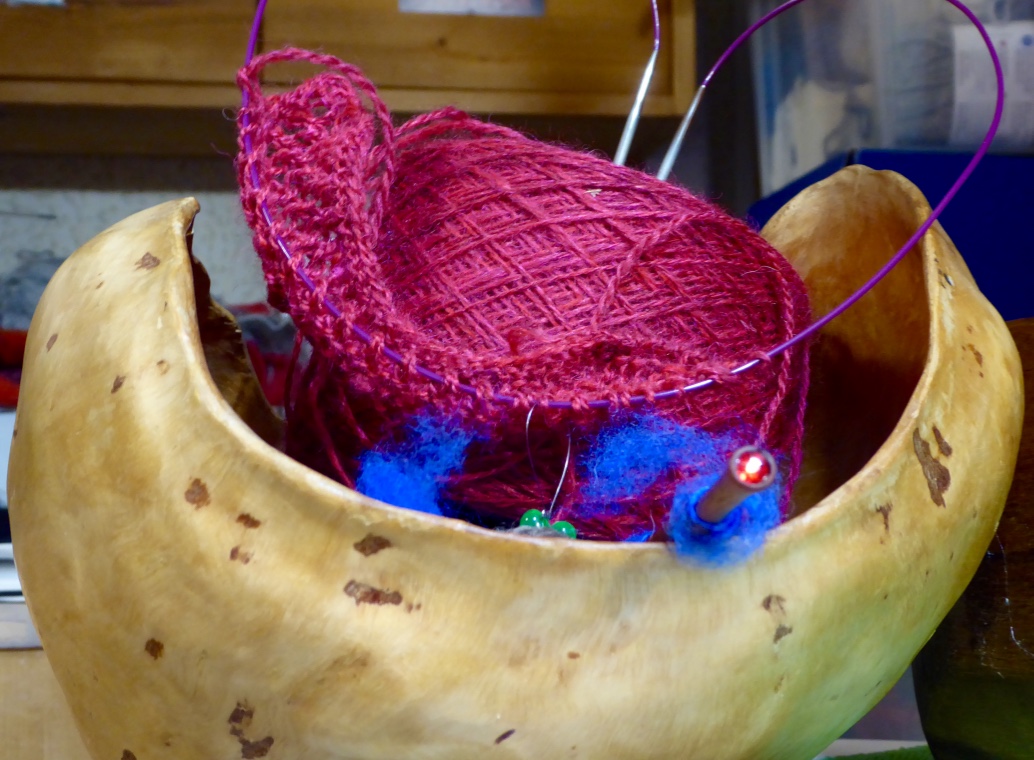
It’s a blend of BFL/silk dyed by my friend Britt-Marie in Sweden, shrieking pink longwool, red silk, tomato red Merino. I carded the fibers on the drum carder. It’s a strong, fine, soft yarn, I’m quite pleased with it. I use 3 mm knitting needles.

thumb_P1000154_1024

I’m happy with the colour: a deep, vivid red with a hint of fuchsia.

thumb_P1000164_1024

The pattern is easy, and I like the shape of the shawl. It can be used as a scarf, which is how I usually wear my shawls.

You can find the pattern here: A Hap for Harriet.

Spring is here! We’ve seen so many birds returning already. The first flowers are blooming. I took this photo a week ago at 10 in the morning, now the snow is gone and the road is almost dry, and the sun is much higher in the sky by ten o’clock.

thumb_P1000153_1024

White mohair, black sheep, and black and white sheep

Spinners must be the most generous group of people in the world! I want to show what’s been given me the last couple of weeks. Let’s start with mohair that Sanski Matikainen gave me. Sanski is a professional spinner, and she also teaches spinning and natural dyeing. She’s also very generous with advice on mohair, which a great joy for me.

thumb_P1000060_1024

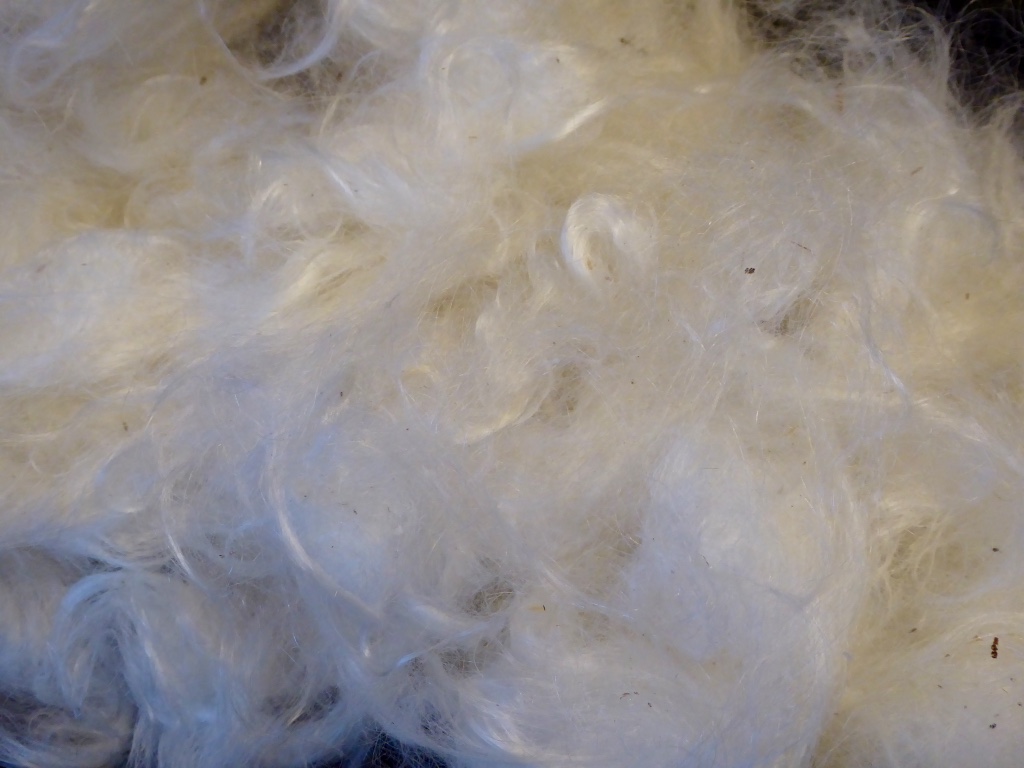
This is a sample of mohair from a 14 year old goat named Birgitta. Soft and lustrous, and very white.

thumb_P1000061_1024

I washed it (remember, very hot water for mohair, otherwise the waxes won’t come out and it’ll be sticky and unpleasant to work with, and almost impossible to get clean later), and then browsed my stash to see what to blend it with for a sock yarn. I chose fawn Shetland top and white silk brick. Next step will be to gently card them together. There’s 14 grams of mohair, 14 Shetland, and 5 silk in each heap. I have four heaps altogether. I’ll add more wool to the blend, after advice from Sanski. Mohair is almost new to me, as I count the 4-5 times I’ve spun it only as an introduction.

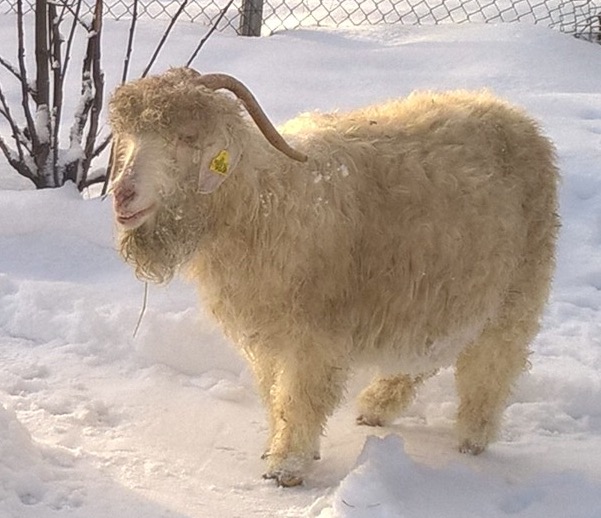
Mohair (Angora) goats don’t go out very much in winter, because the damp weather isn’t good for their coats. Here Birgitta enjoys the nice sunny winter weather. All goat photos with courtesy of Sanski.

FullSizeRender

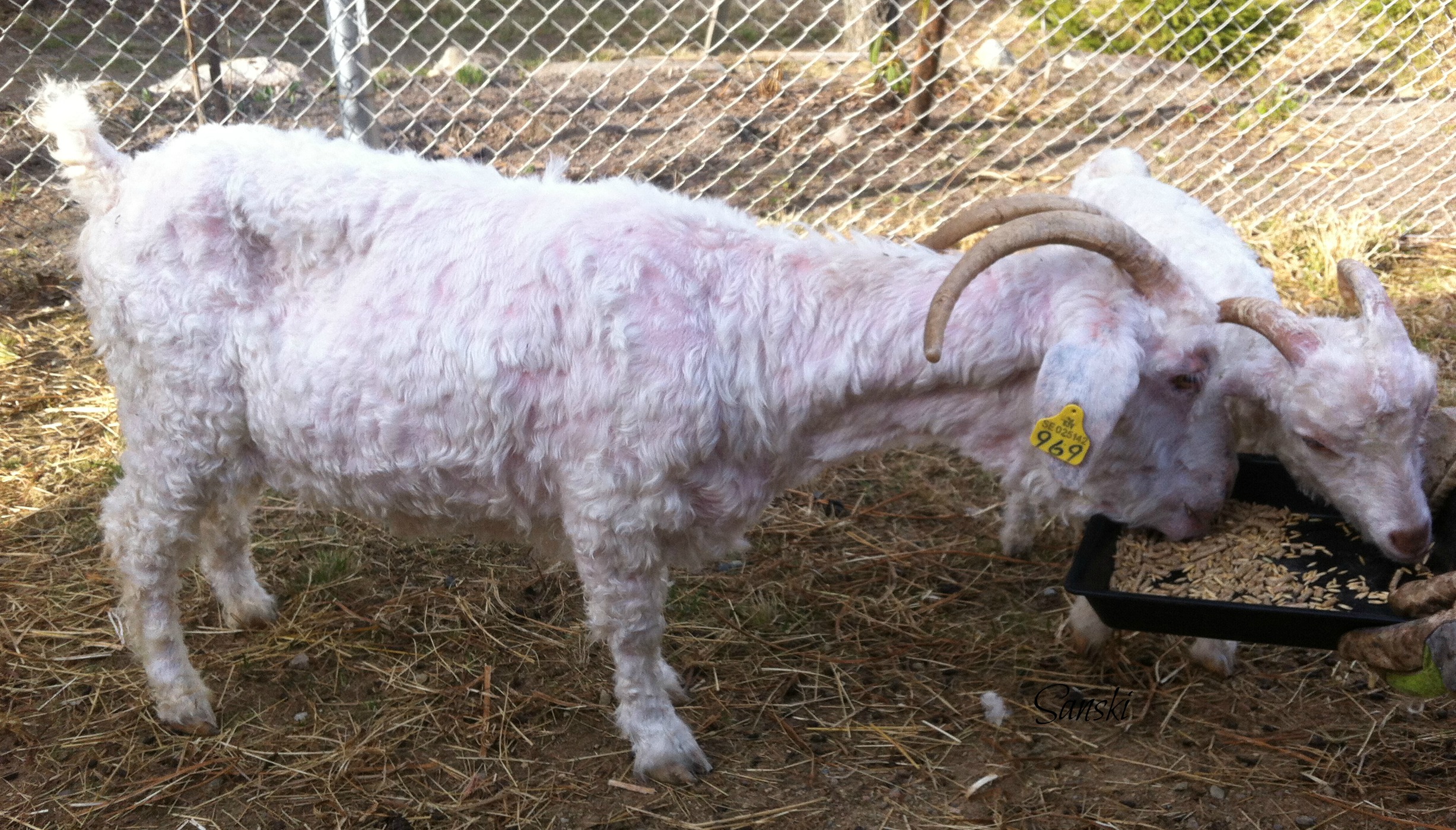
And after being to the hair stylist:

Birgitta lyhyt villa

More of Sanski’s goats:

IMG_0119


The second gift was some readily carded black Finn from Petra Gummerus. I spun a rather thin 2-ply. The two small skeins are bobbin leftovers from light brown and black Finn also from Petra. The yarns before washing:

thumb_P1000063_1024

May I present Weera, the black ewe who delivered her wonderfully soft and silky wool. Sheep photo courtesy of Petra.

thumb_12835058_10207489474269272_1813063553_n_1024

She lives on Myllymäen Tila together with a herd of Finns with lovely fleeces in white, brown and black, gently cared for by her shepherdess and spinner Petra Gummerus. Petra spends hours skirting and removing double cuts and vegetable matter from the wool before she sends it to her buyers. She’s a gift to hand spinners!

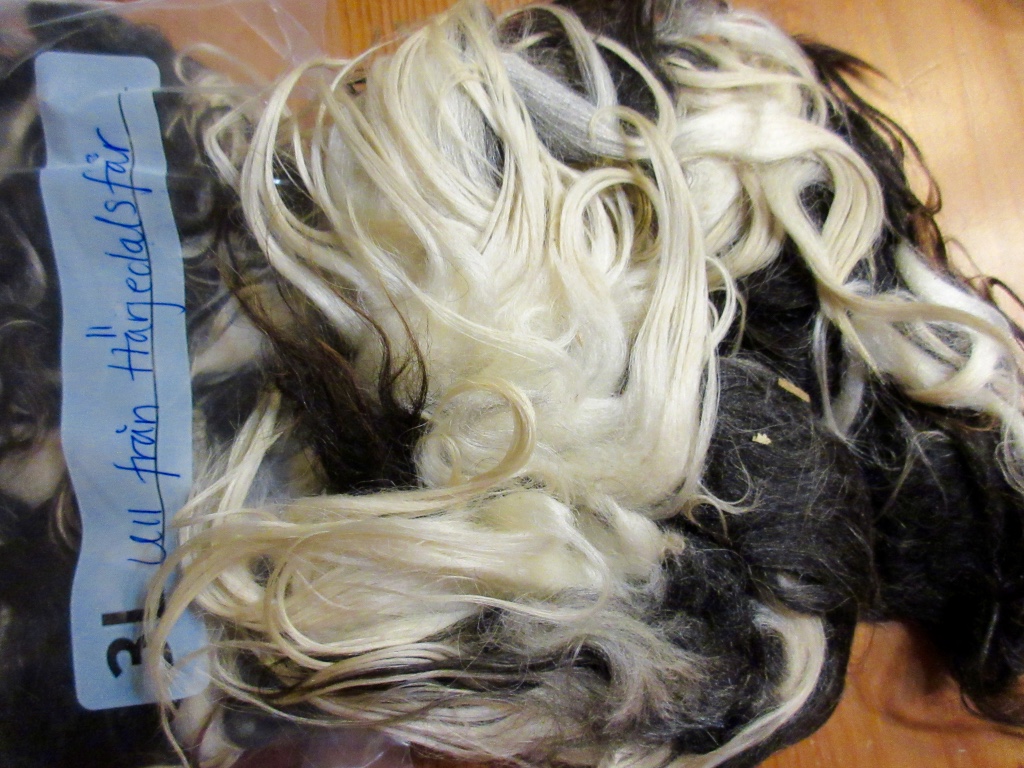
The third gift is a rare wool. Härjedalsfår from Sweden isn’t a recognised breed. It’s a cross or mix of several breeds, where Norwegian Spaelsau seems to be dominant in this particular sample. There are only 5 flocks in Sweden, so there’s isn’t any chance they will be registered as a breed in the near future. But you have to start somewhere, don’t you? The sheep are double coated with a strong overcoat and a soft undercoat. Several breeds in Sweden have that kind of wool, among them Värmlandsfår, Dalapälsfår, Klövsjöfår, Roslagsfår. Thanks to Désirée, who sent me this! It’s still in the grease, but will be scoured very soon. I haven’t decided how to handle it. Separate the colours, separate the guard hair from the undercoat? Or just card everything together?

thumb_IMG_0991_1024


As you can see, I have some wonderful moments by the wheel ahead of me. I have to get it done soon, because it’s now definitely clear that I go to Shetland Wool Week in September. You who have been there, guess where I’ll go more than once? And what I’ll have to send home by mail, as it won’t fit into my baggage?

Bowl

thumb_IMG_0010_1024

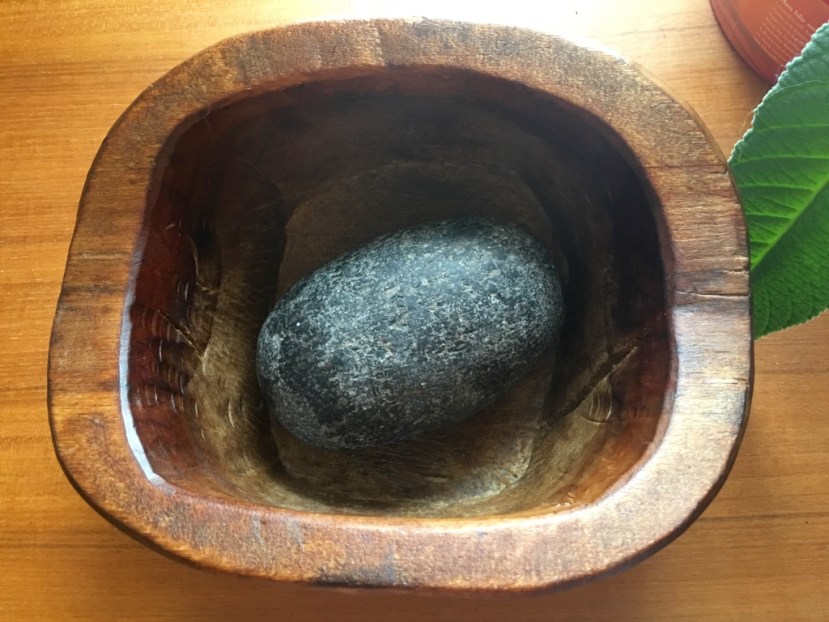
This used to be my grandmother’s salt bowl. She kept sea salt and a stone to crush it with in that bowl. It was in my parent’s cellar for decades, until my brother found it and asked if I wanted it. Of course I wanted it! It was in bad shape, dry and dirty, but it stirred a memory: I knew I’d seen that bowl long ago.

My brother also found the stone.

thumb_IMG_0035_1024

I think it’s from the Gulf of Bothnia. The people from my grandparents village used to go fishing Baltic Herring in the autumns, when the fish has the best quality. They then salted it in big barrels. You can see one in the right upper corner of this photo showing a fishing boat that was typical for the coast of Ostrobothnia. There’s a fantastic museum in Malax: Kvarkens Båtmuseum.

thumb_IMG_0678_1024

Fishing boat, Kvarkens båtmuseum.

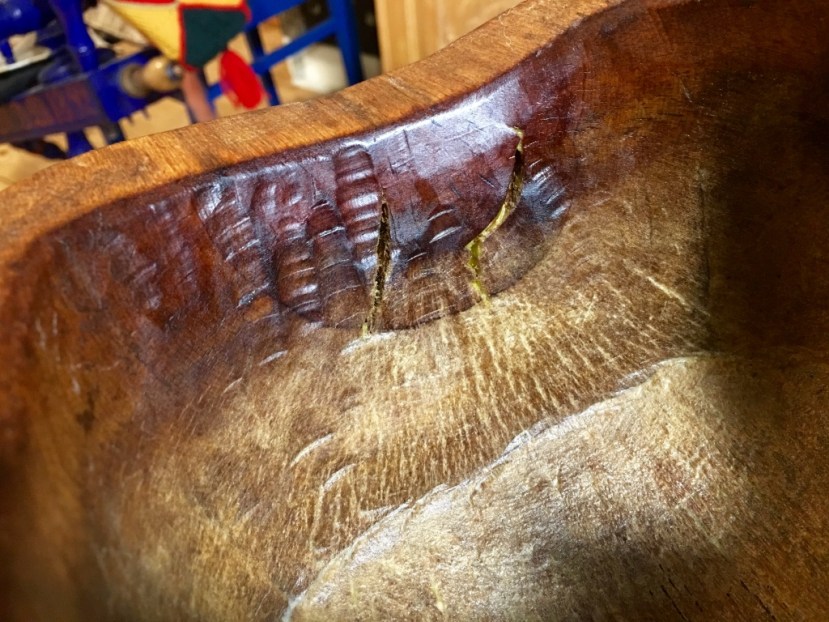
I didn’t do anything to improve the bowl for many years. One evening when I was feeling bored and didn’t want to knit, crochet, or spin, I took linen oil and thought I’d fix the bowl. Was it thirsty! Oh my, it drank half the bottle of oil in a blink, and then I hadn’t even started with the bottom. I left it to dry for a couple of weeks, and then tried bees wax and canola oil. The bowl loved it, and all of a sudden there was a shine to the wood, and you could see wonderful details that had been hidden.

thumb_IMG_0014_1024

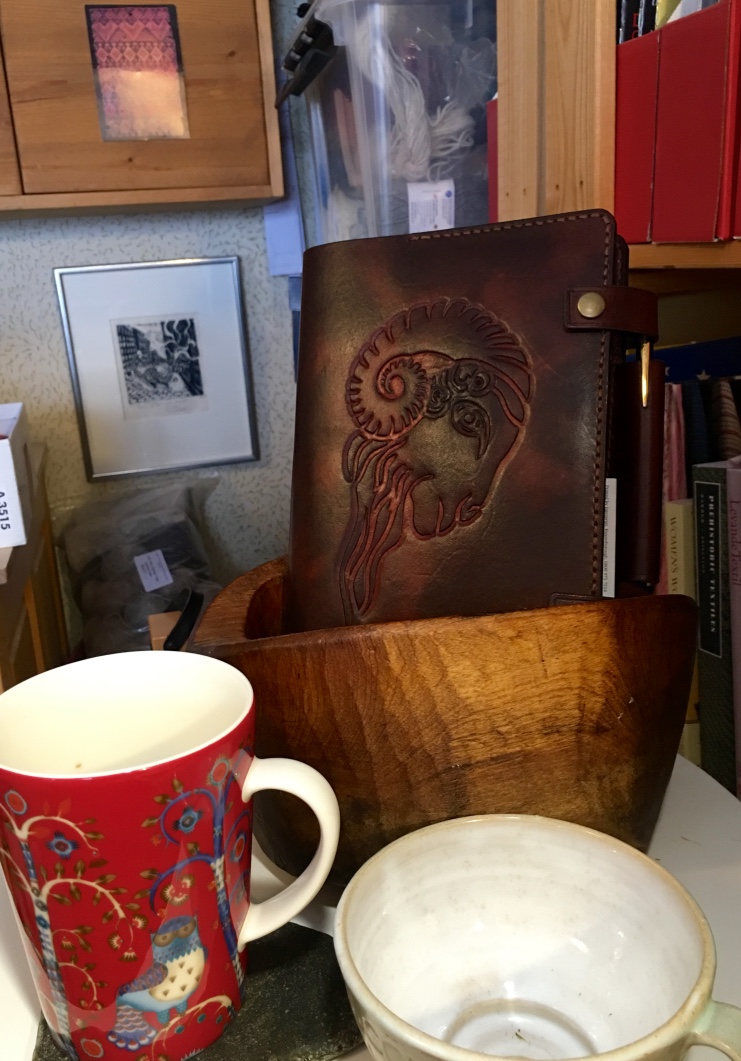
I love this bowl! It sits on a small table next to my chair. I keep small things and my big note book in it. I love the note book cover just as much – my brother made it for me.

thumb_IMG_0041_1024

The beauty of everyday things! My caffe latte mug is from Iittala, the café au lait cup is handmade and a gift from a spinning friend.

I think I love to teach teachers

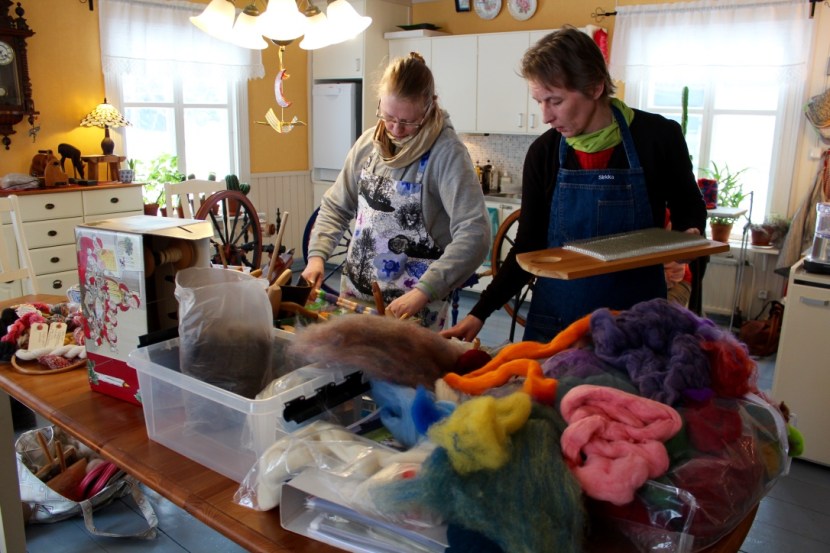
I’ve had a lovely weekend! Last autumn I decided to start teaching in our home. I can take as few pupils at a time I want, and I can concentrate on them. So this weekend the first group since the 90s was here in our kitchen with their wheels and other equipment, and I let them use most of mine. We had so fun! I want to do this again! My idea with these small workshops is, that I have time for everyone at least to some extent, can give personal tuition, but within the limits of the theme I’ve chosen. This time we concentrated on fiber prep and learning the the longdraw, but also took a first step to fibre knowledge.

As you spinners know, learning the long draw is a piece of cake compared to fibre knowledge!

thumb_IMG_7589_1024

Mervi, Petra, Sanski, and Stina at work.
thumb_IMG_7591_1024

Mervi and Petra with the blending boards and the wool.

thumb_IMG_7593_1024

Stina’s husband had finally fixed her spinning wheel, and now her spinning is rapidly improving. She has a Toika wheel, a famous Finnish brand that many of us own or want to own. Mervi, Sanski and I also have Toikas, so there were four Toika wheels in our house during the weekend. I used my blue Saxony (unknown maker) this time, and kept my Toika and Louet Victoria as spare wheels for anyone to use. Stina is a retired bookbinder who’s been active in my guild for a long time. She’s a person who laughs happily most of the time, with sudden outbursts of frustration when the wheels won’t work as she’d like them to do. On/Off, and it’s a joy to listen to. In the summers Stina’s worked in the printing house at Stundars, where our guild has its headquarter. She’s also been teaching bookbinding.

Sanski is a professional spinner and she teaches spinning. She has a few Mohair (Angora) goats, so I made her do a little bit of work: she gave us a first introduction to Mohair and left me some samples I’ll use in workshops in the future. Here’s her site: Rukki ja rautapata. I’ve always loved that name, “The wheel and the iron kettle”, isn’t that a wonderful name for a business in spinning and natural dyeing?  also a dyer who uses natural dyes. I’d so much like to learn that skill, but I’ve had to give it up: I simply don’t have time for it. But what we have in common is our skills and knowledge in how to spin dog hair, chiengora. I did that for many years as part of my livelihood, and it’s a part of Sanski’s livelihood. I so wished we could’ve spent more time talking!

And there was Petra, who is a sheep farmer. Her spinning skills has improved so much in a very short time. She’s a person who take things seriously, but with a wild and wonderful humour. Her systematic way of learning is a joy to follow. And her Finnsheep wool is a joy to use. The whole weekend we’ve been laughing at her: each time she found a piece of VM, however small, in her wool, she made a big row of it. I promise: the wool I buy from her is the cleanest I’ve ever seen, except for the poor fibers that have gone through the chemical baths. Can I fully express how grateful I am for a wool producer who takes her work as serious as Petra does? I see nightmares when I think of all the hours she must be spending with picking out every little leaf of grass or seed or double cut from her fleeces, and carefully skirting them. She knows how to teach people to ride a horse. She may even get me on a horse back, I THINK. I’m not quite sure, I’m afraid of horses and I can’t read them, I’m sure they’ll kick me or step on my toes. Yes.

Mervi is a textile and DIY teacher with knowledge in most techniques. Now she’s rapidly learning new spinning skills, and I’m sure that despite her denial she’ll be teaching spinning very soon. I was so happy to gift her all the empty coffee bags I’ve been saving for years in the vain hope that someday I’ll have time to make something from them. Mervi teaches those skills, and now she has a heap of bags to present her pupils.

So four teachers coming together and then me, teaching teachers. A bit scary, I must admit. But I loved it! My pupils where so kind, and they had no problems in making themselves busy with combing, carding, using the blending boards, spinning, and – talking. They talked a lot. And when I wanted to say something, they listened. Almost all the time. Wow. I say – wow.

thumb_IMG_7577_1024

Kasper and DH went upstairs to my room and stayed there. I love them. That’s DH’s back bending over some of his texts that he needed.

UFO became FO

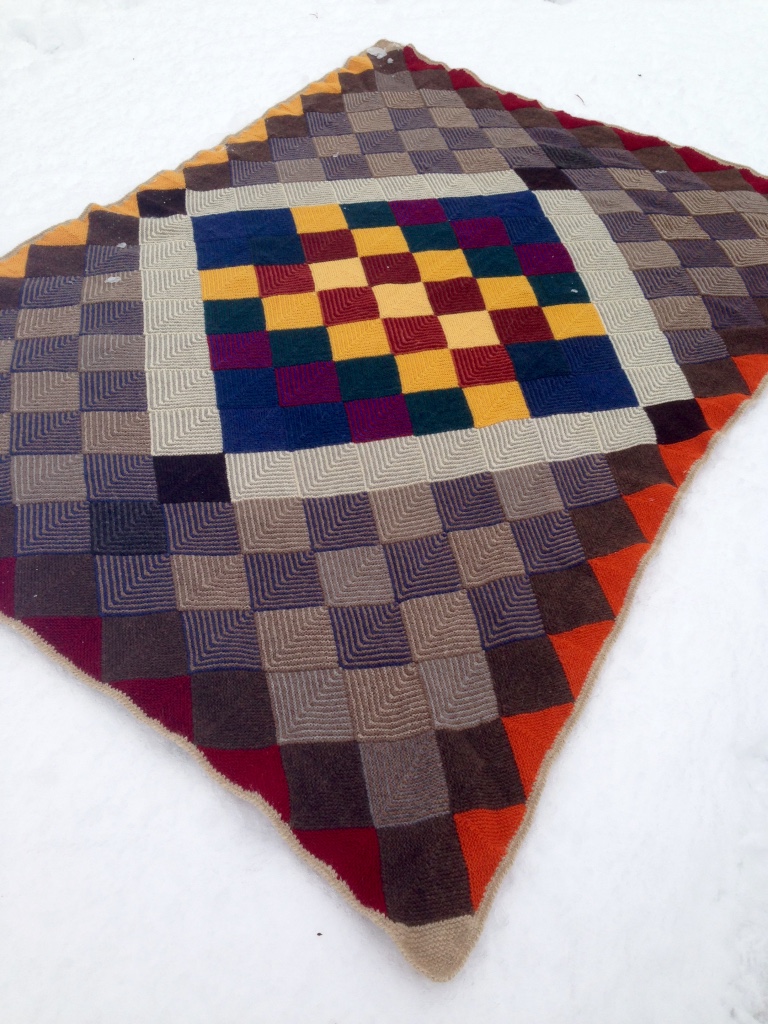
About 14 years ago I started to knit a blanket from left over yarns. Like other badly planned projects, also this one came to a halt when I got out of red yarn in that particular shade and weight. So I put it away and thought I’d buy more one day. And forgot all about it.

I found the blanket when I moved my spinning, knitting, crochet etc into my new room some years ago. And I still didn’t have that red yarn, so I put it on a shelf to wait for better times. It took a while for me to realise I do have more of that yarn! I had bought it for a crochet project, but had forgotten all about the afghan. One day this January, while waiting for the cold to leave my head and let me think again, I saw it! And I finished the blanket. It’s big enough for hubby’s afternoon nap.

thumb_IMG_4042_1024

The technique is domino knitting the way Vivian Høxbro teaches it. Here’s a link to her Danish site, where you can change to English. But do look at the photos in the Danish version first! She doesn’t teach very much anymore, but if she happens to come somewhere near you, don’t hesitate! She’s a strong Nordic woman with much integrity, a big laugh, colourful clothing, and great knowledge about colours and design. Domino knitting is one of my favourite techniques. It’s perfect for left over yarns. It’s also perfect for many big projects, as you knit one small square at a time, then attach it by knitting the next one onto it like a Domino play. You don’t have to hold the whole heavy project in your hands, only that small square. Good for your hands, good for your mind as you can knit a square within half an hour, and feel as if you’ve finished something.

Now I wonder where the rest of my UFOs are…

At last! Spinning again!

An odd thing happened when I was sick with the cold (or flu, whatever it was). Spinning made me cough!  Weird.

But now I can spin again. Here’s what I’ve done the last few days:

thumb_IMG_7557_1024

Dog hair yarns! I also spun the red roving I showed in an earlier post. And the 3-ply barber pole is a yarn I don’t like very much, but I know it’ll be good in a weaving project. It’s unfinished in the photo.

The chiengora is my first dog hair yarn for many years. I used to earn part of my living by spinning chiengora for customers for some 15 years. I was so fed up with it for a long time, but now I wanted to see how my new drum carder would blend wool, Keeshond hair, and silk. It did it very well. Here I’m starting to blend opened (teased on the carder in one pass) Kainuu Grey wool with the dog hair + silk that has also gone through the carder once:

thumb_IMG_7541_1024

I used coloured silk in some of the batts, and spun three different yarns. Two skeins with thicker yarn, one thin with leftovers from a bobbin with merino (I think), and two skeins with my default yarn. I like them all!

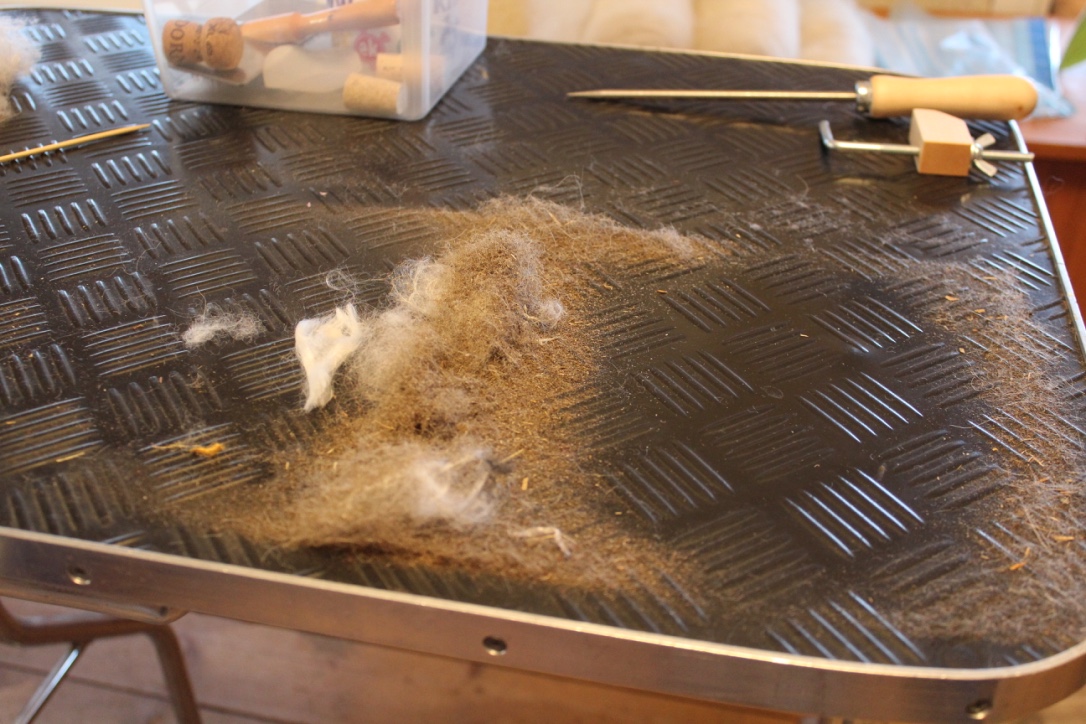
There was pretty much debris in the wool and the dog hair! Some of the silk fell through, but that’s not a problem: shake it, and the debris falls out and you can use it.

thumb_IMG_7547_1024

After the successful carding of the rather long Keeshond hair, I wanted to try something I’ve been thinking of ever since Kasper came to live with us more than ten years ago. I’d like to spin his very short undercoat. So here we go: the 1,5-2,5 cm long Kasper hair on top, and some Kainuu Grey lamb locks underneath. I also added a little silk. Silk is magical in chiengora yarns. It binds the shorter fibers, and adds lustre to the yarn. I’m not afraid to use my scissors – I often cut silk tops into shorter lengths to make the blending and spinning short, tricky fibers easier.

thumb_IMG_7553_1024

Here’s a Kasper batt ready to be doffed off:

thumb_IMG_7555_1024

I haven’t spun the batts yet. As you can see, I haven’t blended the different shades of the Kainuu Grey thoroughly, as I like the heathered look very much. If I’d like an even colour, I’d card the wool separately in 2-3 passes before adding the evenly coloured Kasper hair. The undercoat from dogs is very fine and delicate, and it can’t be carded in more than 2-3 passes on the 72 tpi card cloth before it starts breaking and making pills.

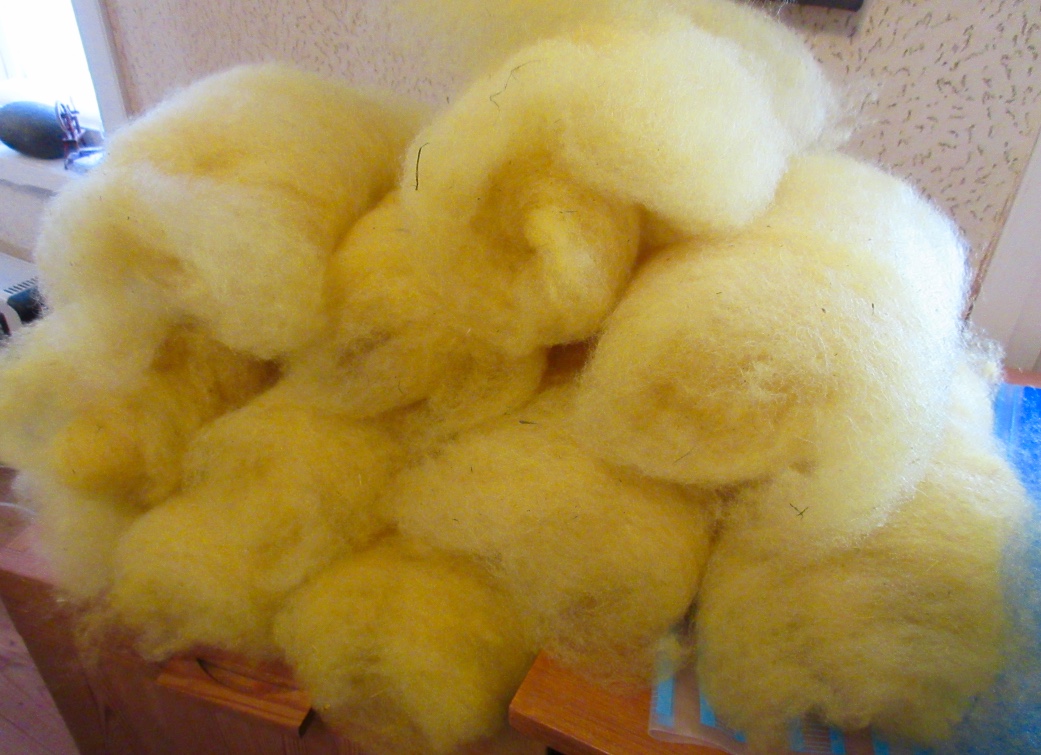
So now I’m working through my not so small fiber stash. I’m opening fleeces in one pass. I’ll use most of those rovings for blending both for colour and structure later. It’s so much more fun to just start blending and not being forced to open the fleeces first! Here’s some light yellow Finn x Texel ready for blending or further carding as it is:

thumb_IMG_0940_1024


Flu knocked me down

I have been ill, an angry winter flu knocked me down for two weeks. I’m slowly recovering, so soon I will have something to show. A good thing is that we finally have a little snow after a snowless autumn. Kasper too likes snow, but he doesn’t want to be outdoors for long when it’s as cold as today, -20 C (-4 F). He suffers from cold cramp in his legs and paws now when he’s old.

thumb_IMG_0953_1024

Here he tries to warm his paw by licking it, but the only result was cramp in his hind leg. Poor little friend.

thumb_IMG_0954_1024

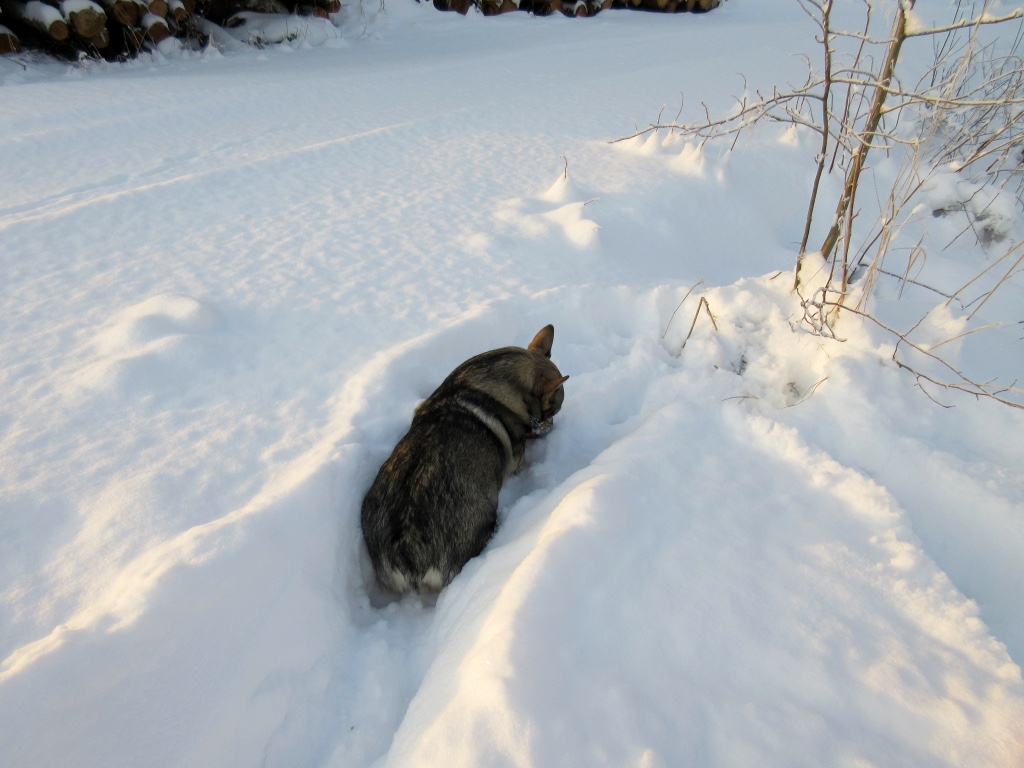
He was also a bit upset by not being able to find his loo immediately the first morning with snow. Putting his head under the snow and finding his way by sniffing solved the problem! I have to tell him about the red rag the forest company has tied to his favourite tree.

thumb_IMG_3974_1024

Awesome present from hubby!

Yesterday my Christmas present from hubby arrived:

thumb_IMG_7506_1024

It’s a standard Classic Carder! 72 wpi, with options for replaceable drums of 48 and 120 if I’d need them one day. I started carding by blending short pinkish-red Norwegian Kvit Sau x Suffolk and long shrieking red Finn x Texel to see how fast the carder can blend them = very fast! I was happy to diz off a soft pencil roving in warm red after only a few passes. So satisfied! Love my husband 🙂 I also bought a porcupine quill for cleaning the drums. It works much better than I expected. It catches the fibers between the tines and lifts them up better than any other tool I’ve tried. My old electric Louet drum carder will soon move to a dear friend in Sweden. It’s served me well ever since the late 90s, but isn’t what I need now when I don’t spin for customers anymore.

This is my gift to myself: a beautiful spindle I found when browsing Etsy for a Turkish around 25 grams. It’s from Natural Knot Wood, a shop with many fine spindles. The arms are Chakte Viga, a new wood to me, and the shaft is Walnut. It spins fast, and as it fills up with yarn it also spins long, so it’s good for both spinning and plying. I continued the Corriedale project on this newcomer in my spindle stash. Yes, I do have a Turkish period!

thumb_IMG_3918_1024

A year has almost ended, once more. I’ve seen quite a lot of new years by now. This year has been so full of catastrophes and misery in many parts of the world (if not for me, my year has been extremely good), may the next be better! Here’s a window to 2016 from me to you:

Gott nytt år

New hair

thumb_IMG_7475_1024

New hair from Finnish landrace wool! She needed it badly. Someone had glued white synthetic hair on her head, I couldn’t stand looking at it. I’ll give her a nice hair pin to keep the hair away from her eyes, and a sweater for cold days.

Orange

For many years I disliked orange, I don’t know why. Now I like it! It’s such a happy colour. Warm like the sun, full of life. I dyed some Corriedale a couple of years ago, and last week I used my biggest Turkish spindle from IST to spin a yarn for tapestry crochet.

thumb_IMG_7411_1024

Singles.

thumb_IMG_7422_1024

Plying.

thumb_IMG_7426_1024

Ball of yarn!

thumb_IMG_7427_1024

Skeined.

thumb_IMG_7428_1024

Skein beside water mole hole. I wish all the water moles would move somewhere else and stop undermining our lawn and making it impossible to grow vegetables. Walking on the lawn in the summer is hazardous.

We had frost this morning! The summer neighbour’s old barn was glittering in the sun.

thumb_IMG_7447_1024

Kasper was bored with me today. I often have the camera with me when we take a walk, and he hates waiting for me. He was so happy when we came home and he saw hubby putting on his walking gear! Now they’re on a long walk in the woods. He’ll be a tired, happy old dog when they come home!

thumb_IMG_7443_1024