Category: Uncategorized
Campanica
This was a nice new wool: Campanica from Portugal. The two wool samples I got were from the same sheep, and quite different in character. That is not unusual, in fact it’s what most sheep produce: different wools from different parts of the body. The site I linked to doesn’t mention other colours than white, but there are black/brown Campanicas also.
I prepared and spun a few samples, and then spun two different yarns:

The smaller skein: coarser wool with kemp. Carded and spun woollen.
The bigger skein: softer wool with a small amount of kemp. Hand combed and spun worsted.
This was interesting wool to work with. It reminded me a bit of some crossbred wools I’ve spun, like Finn/Texel. Soft with a bounce, and not so little of the bounce either! There was yellow stain in the softer wool, which can be seen in the slightly yellow tone in the yarn. It would be a perfect wool for many kinds of sweaters, from rough outdoor to in-between sweaters for winter use, and thinner for summer. Socks, hats, mittens. In Portugal it’s used for blankets and rugs, mixed with other wools. The coarser yarn I would use just like that, in a blanket, bag, or carpet.
I just learned that there is a number of people trying to preserve the traditional Portuguese ways to prepare and spin wool. They have a group on fb called Cooperativa Oficina de Tecelagem de Mértola. Use the fb translator to see what they’re doing.
Blue
Blue is my colour. I like all colours, but I love blue. So last autumn I bought blue paint for the distaff holder where you put your distaff when you spin flax. The lower part of the holder is new, turned by a kind man at the outdoor museum where I use to spin in the summers. He wanted me to paint it, so I did that a couple of days ago. I painted my spinning chair blue as well, because I really like to paint. And because I love blue 🙂
And then another kind person from that same museum called me and asked if I would like to take care of a spinning wheel, an heirloom that had belonged to a friend of her family. I said I’d have a look at it. And it was blue. And the wheel was straight, it had all the necessary parts, and I said, yes, I want to take care of it. I call it Elsa after the last owner. Here she is, with the blue chair, the blue arms, and my other Saxony wheel Eevi, and little Peerie Louet Victoria.
I have spun a few meters on her. Eevi is a wonderful wheel, but I have a feeling Elsa might be even better. Let’s see after a few months, when she has got used to her new home and the conditions here. She was made in the municipality where my husband and I have livet the last 24 years. I don’t know who made her. There used to be a wheel maker in almost every village, but what the wheels have in common is the blue colour with sparse red details. And, a relief for spinners with floors you don’t have to be afraid to damage: the legs have metal tips that keep Elsa stay where you’ve put her. No sliding across the floor here!


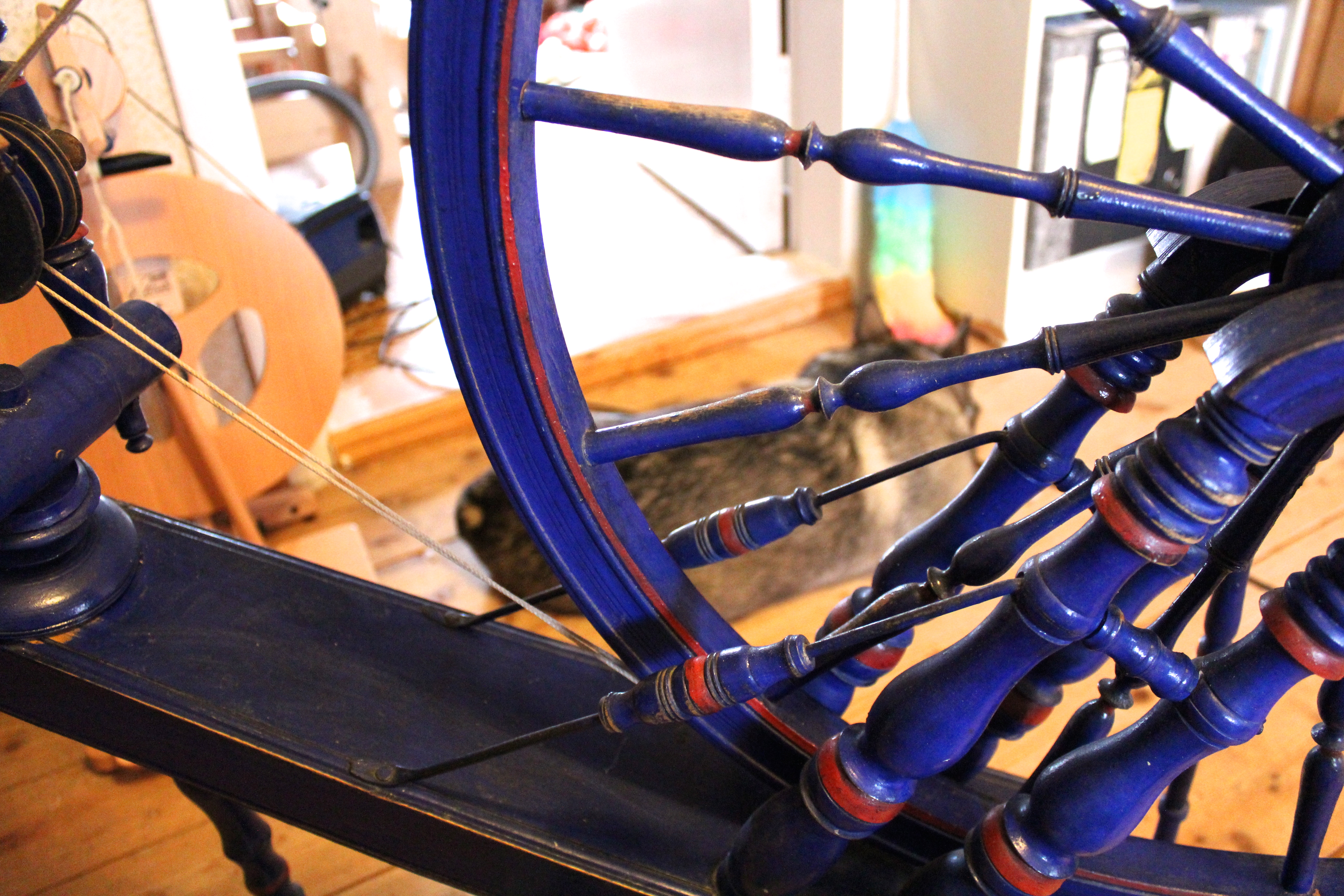
I will add red details to the distaff holder later.
Solar eclipse

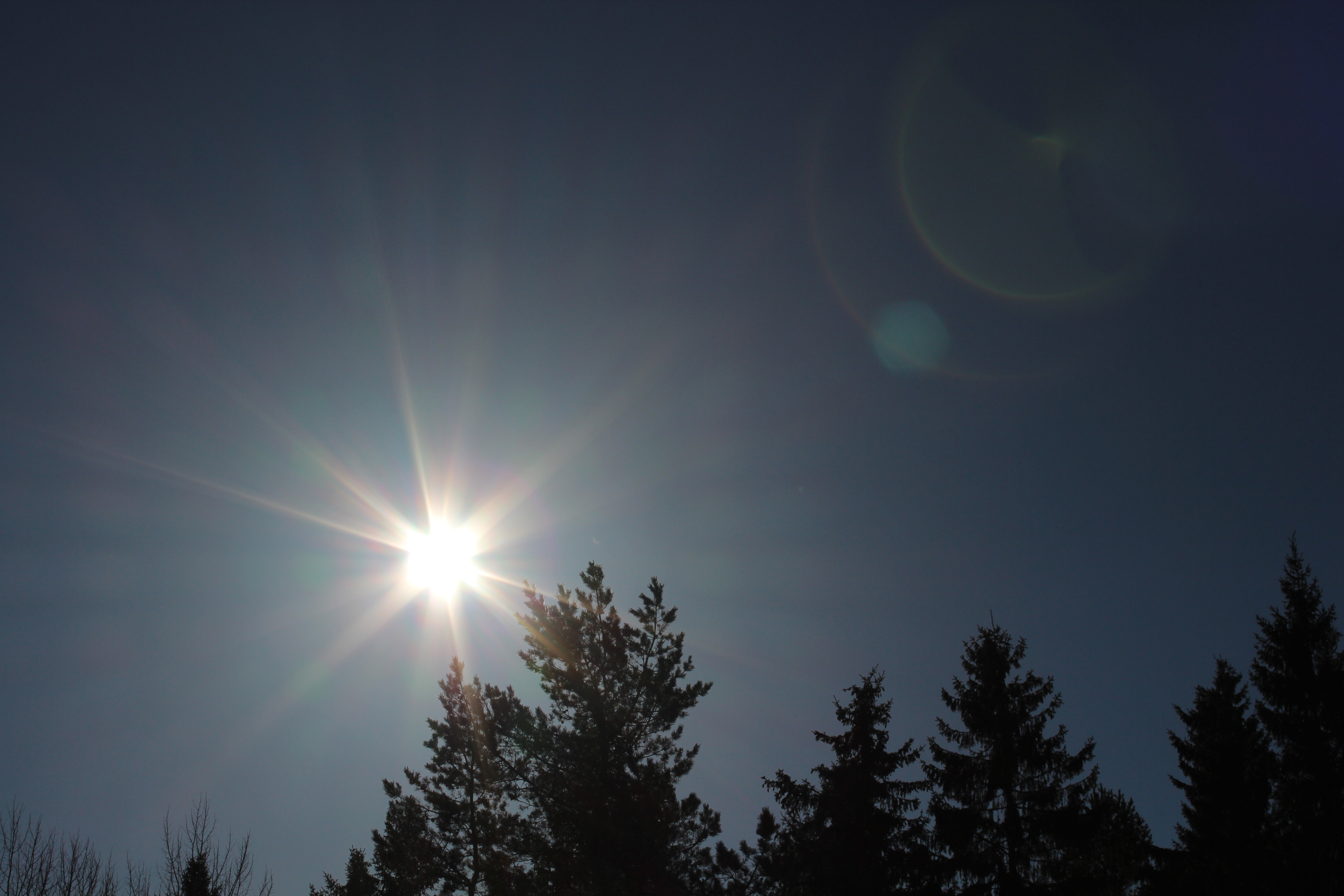
I don’t own a filter… 🙂
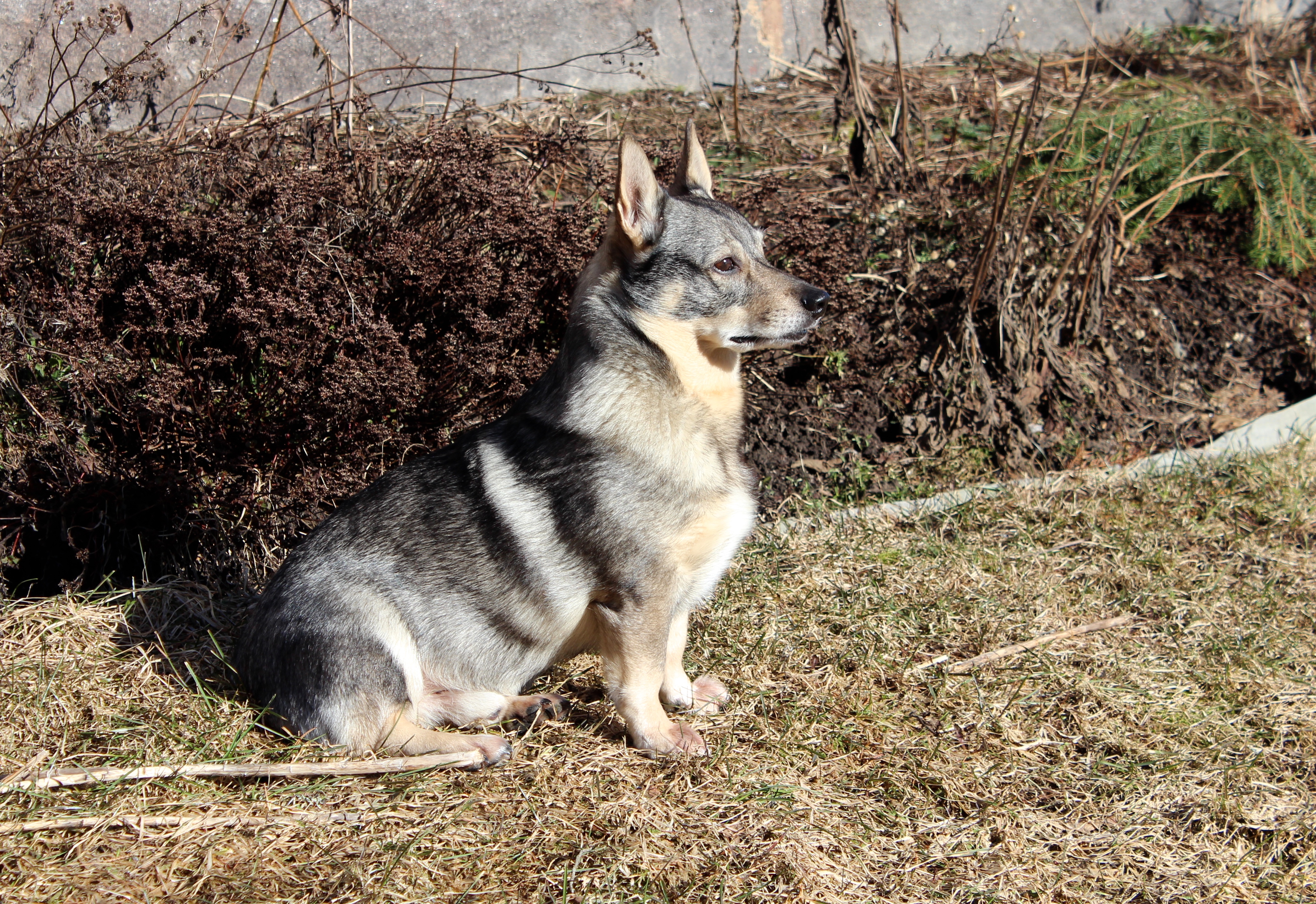
Kasper was a bit bewildered. Where did all the birds go? You can’t see any, and they’re absolutely quiet.
Happy New Year!
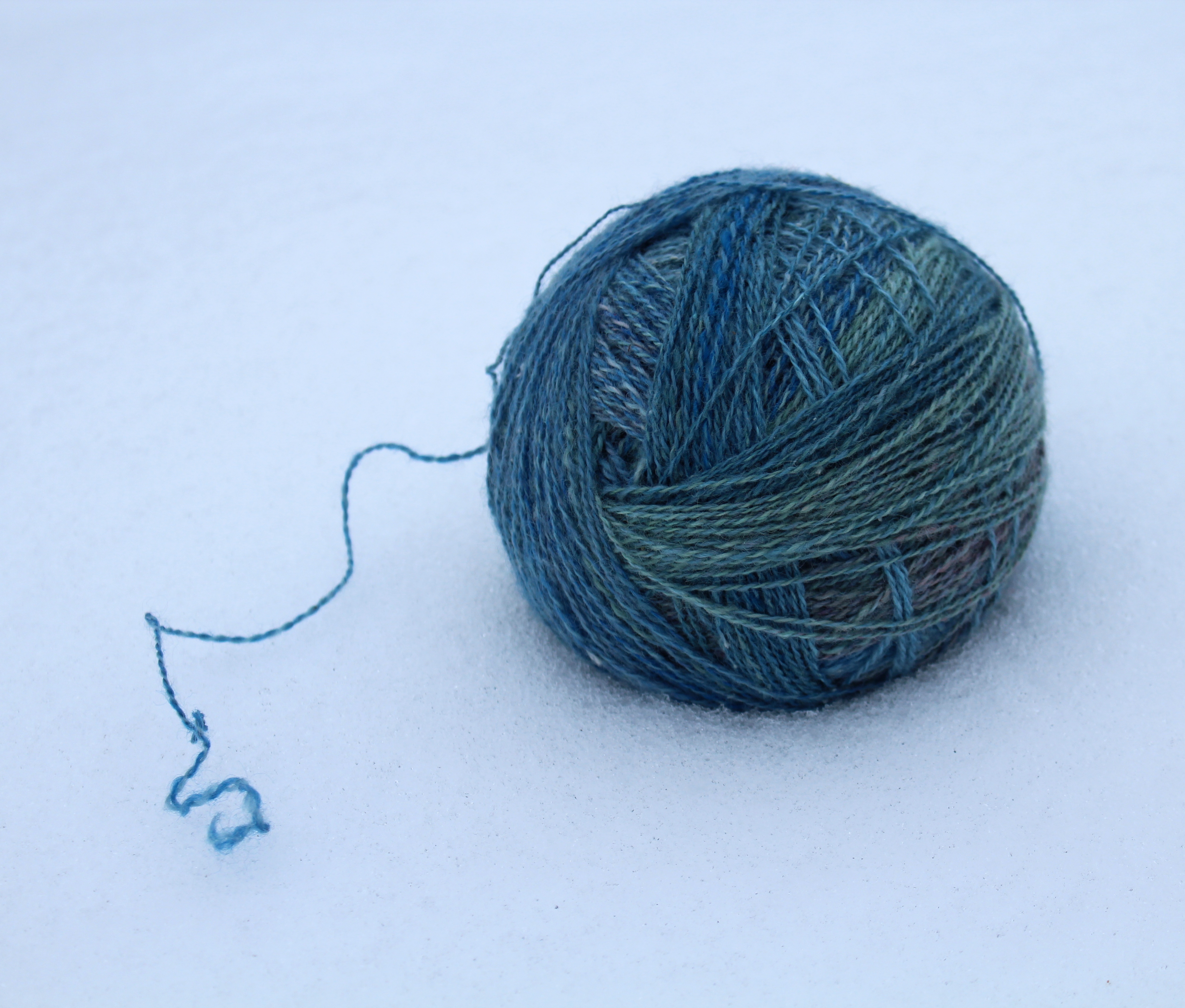
A Swedish Finull and silk yarn, woollen spun. First I’ll knit a pair of long wrist warmers for my husband, then, well, we’ll see! It’s been a good year for me. I’ve spun a lot, I achieved my master spinner title, I bought a new old Saxony wheel, and a loom. I’ve gotten several new friends in the spinning world, and also met some of those amazing people in real life. I’ve got many good books for my textile library.
There was also sorrow: my lovely mother in law passed away a few weeks ago. She had a long and productive life, and she was the same sunny person until the end. We miss her, and we remember her with love and gratefulness.
I hope your year has been good, and wish you all a Happy New Year!
Introducing WOVEMBER 2014
Dear friends – Wovember is here! Enjoy!

Greetings, Wovemberists!
Some of you may know that two members of TEAM WOVEMBER are in the throes of publishing books. The KNITSONIK Stranded Colourwork Sourcebook by Felicity Ford and YOKES by Kate Davies are both tomes with high wool content and their fruition brings work which impacts how much time can be devoted to running WOVEMBER this year.
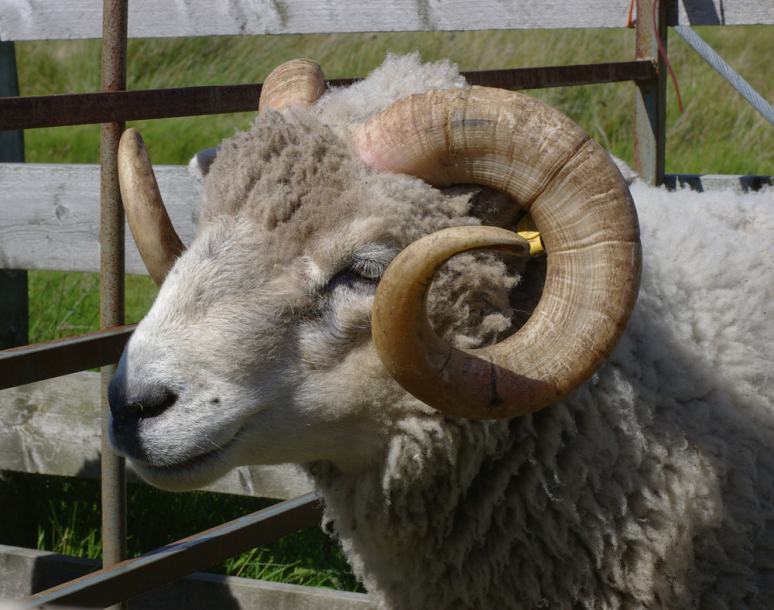
(This handsome Shetland Ram features in the KNITSONIK Stranded Colourwork Sourcebook!)
Tom is busy with his Visible Mending Programme as well as presenting at this event at Glasgow University… all of which is to say that Wovember 2014 is running with reduced human resources.
However the thought of NOT having Wovember is unthinkable and luckily WOVEMBER 2014 IS GOING TO HAPPEN ANYWAY! The irrepressible and passionate wool advocate behind the Knit British website and podcast – Louise Scollay – has happily joined the team and is working to bring you HIGH WOOL…
View original post 343 more words
On Spinning Daily’s blog!
Look: Spinning Daily WWSIP
A Visit to the Fries Museum – Part the Third and Conclusion
See what Tomofholland found in a museum! I learned to darn socks and smaller damages in cloth in school, but this is much beyond. I’m fascinated by Tom’s work, he gives darning new dimensions.

A few weeks ago I visited the Fries Museum archives, and their textile conservator Gieneke Arnolli shared with me many beautiful textiles related to mending and repairing. It was the first time I saw darning samplers in real life. These samplers were educational tools for young girls, teaching them how to repair woven fabrics. However, the Fries Museum also holds many samplers for learning how to repair knitted fabrics. Needless to say that as I particularly enjoy repairing knitwear, these were possibly even more exciting than the darning samplers I shared in my previous post!
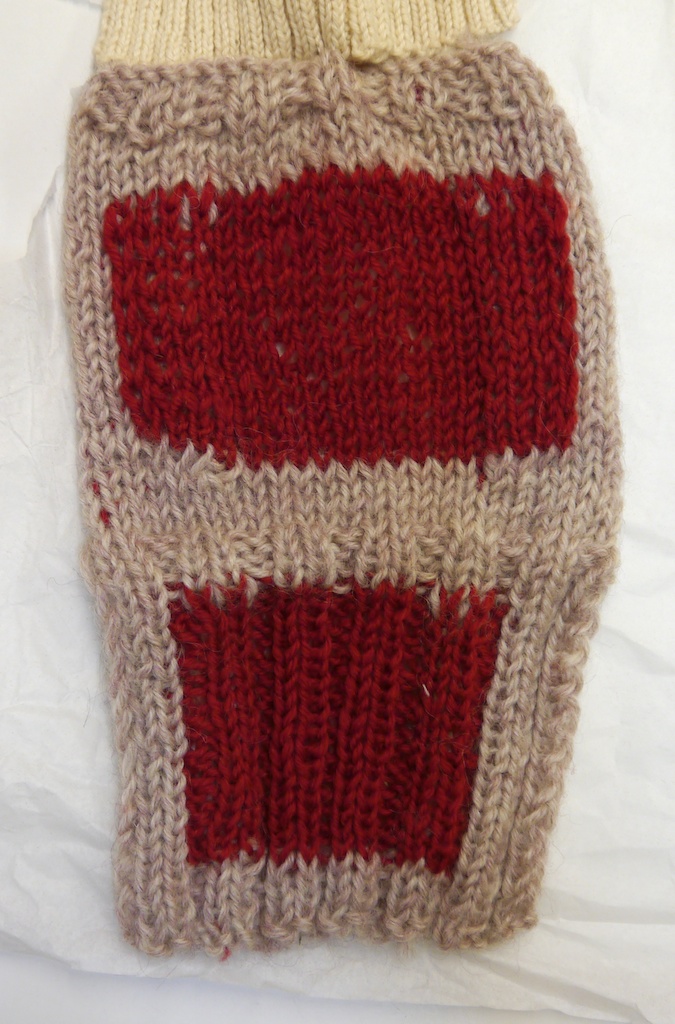
One of many knitted darning samplers. This one stands out as it was knitted from and repaired with wool
The above knitted darning sampler is different from most of the samplers in the collection, as it was knitted from and repaired with wool. Most other samplers used cotton. Incidentally, it is also similar to the technique…
View original post 1,047 more words
Ostrobothnian textiles
We visited four museums during the Nordic Knitting Symposium 2014. The first one was Myrbergsgården, one of the museums in my municipality:
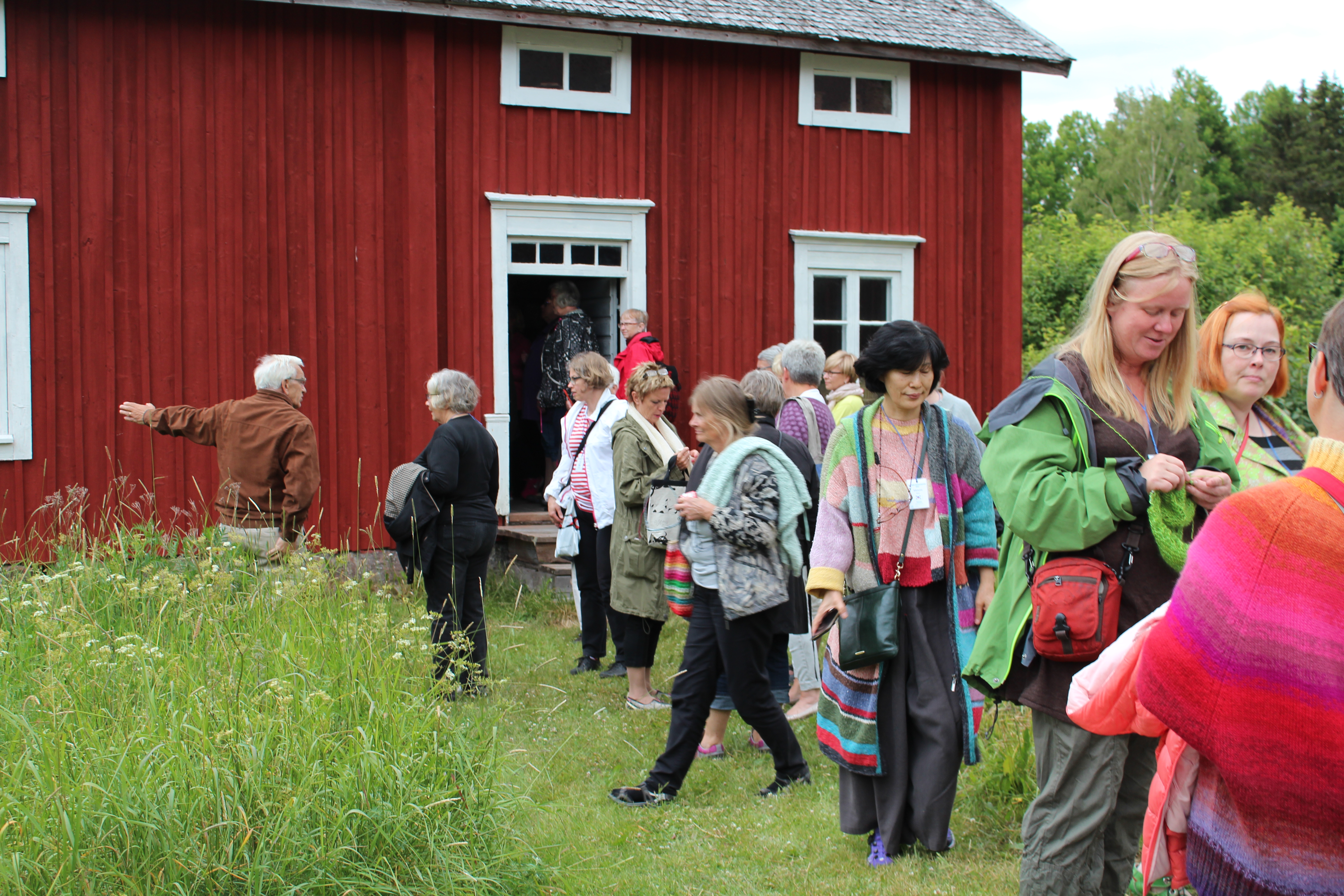
There are 17 buildings on the grounds. The museum is known for its large textile collection with more than 5000 items. It has an especially large collection of embroidery, as many women earned their living by selling embroidery at the beginning of the 20th century. There’s also lots of crocheted lace for bed linen, knitted socks and other garments. This is my favourite closet in the musum:
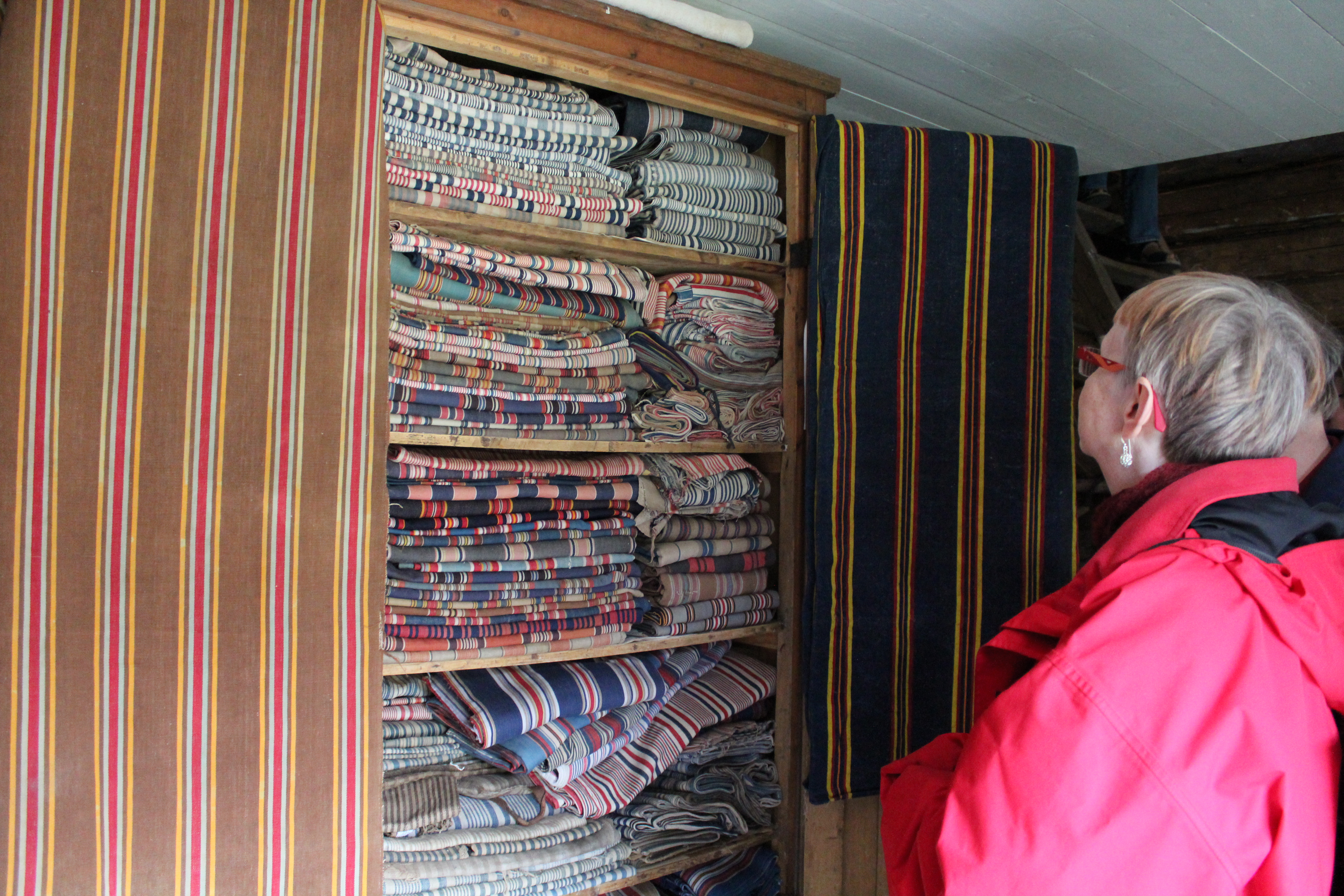
You all know how difficult stripes are! Susanne Hansson taught a class in designing and knitting jogless stripes at the Symposium. This closet with its bolster-cases was much admired!
The next museum was Stundars, where I use to spin in the summers. I didn’t take any photos, so lets go on to the municipality Malax and have a look at Brinkens Museum, where the staff had displayed knitted socks, hats, mittens, sweaters, and more.
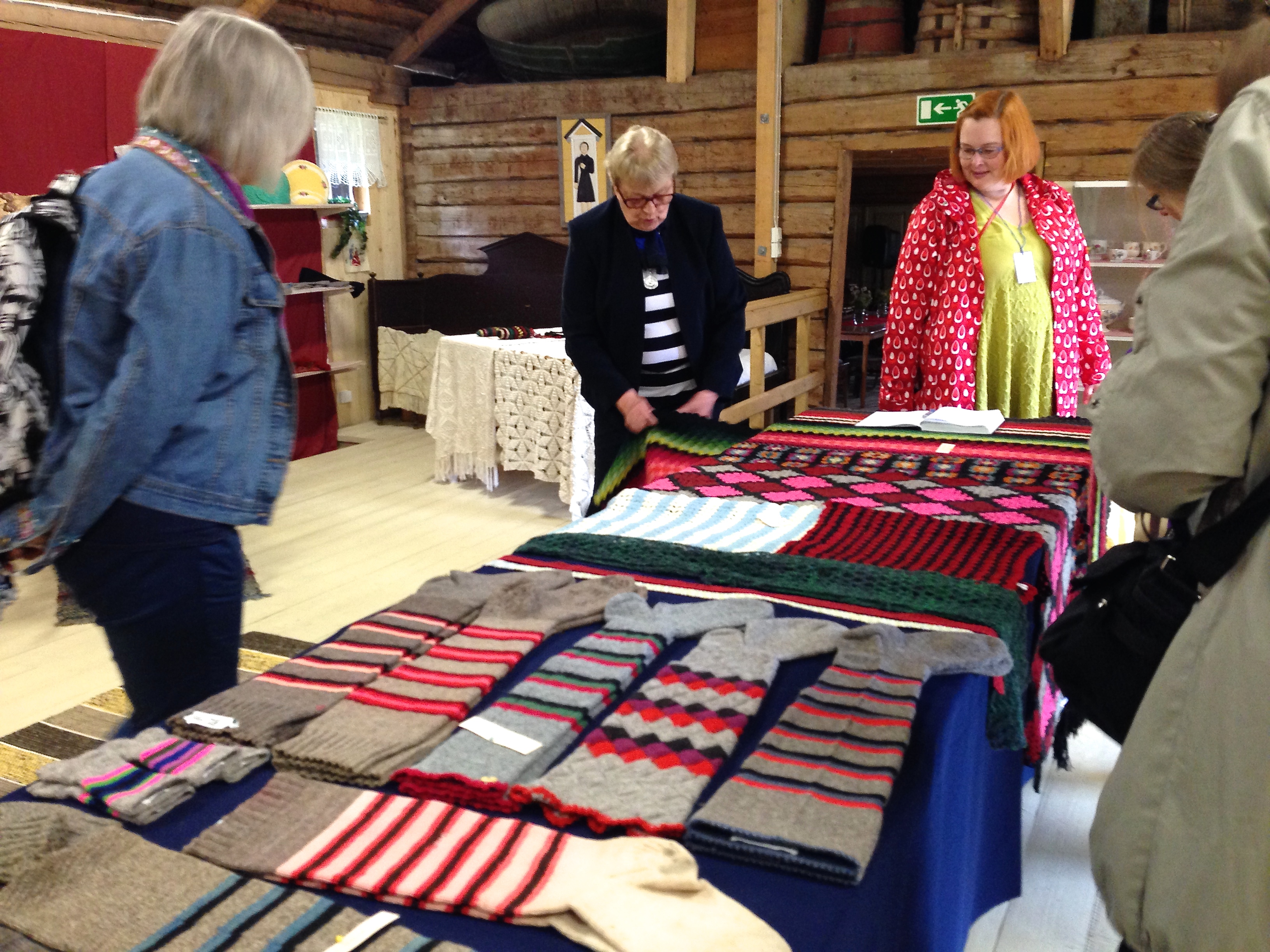
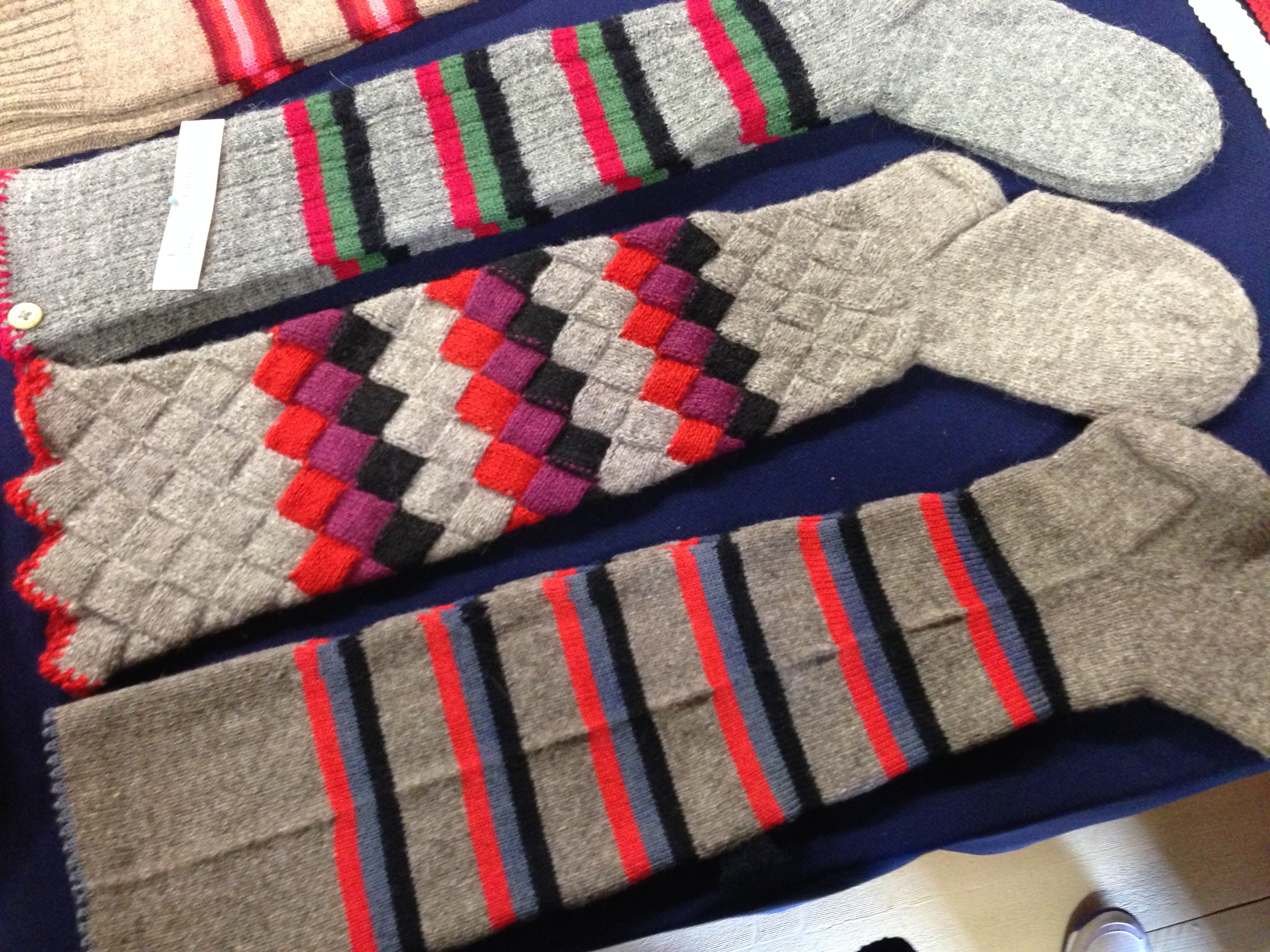
Yes, the winters in Finland are cold! You really need warm clothes. Why not make them pretty even if you can’t see them under the pants and skirts? You can at least see a glimpse of a beautiful sock when the women lift their skirts to step over a threshold or climb the stairs!
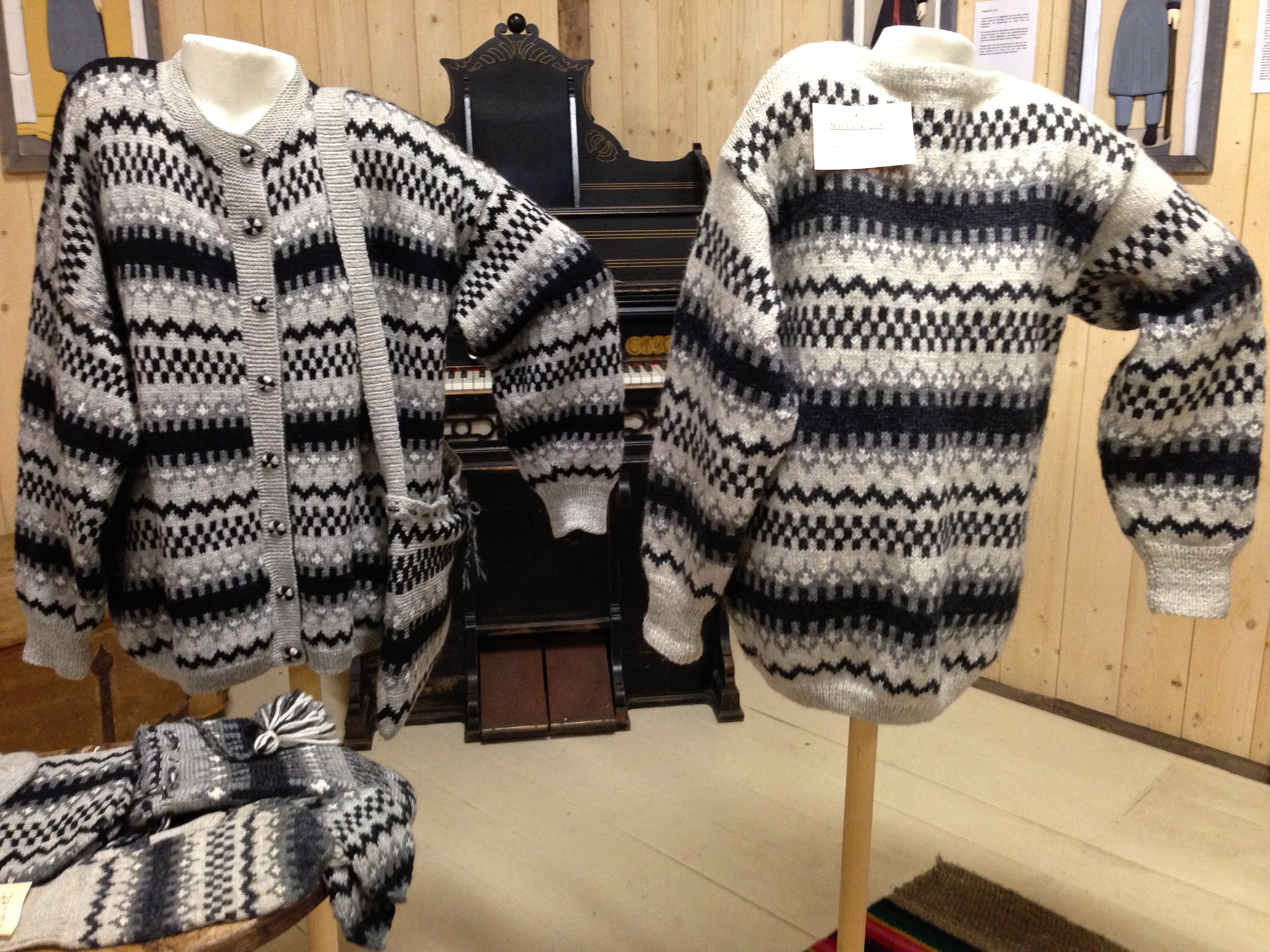
The Malax sweater is knitted from rather thick yarn in the Finnsheep’s natural colours.
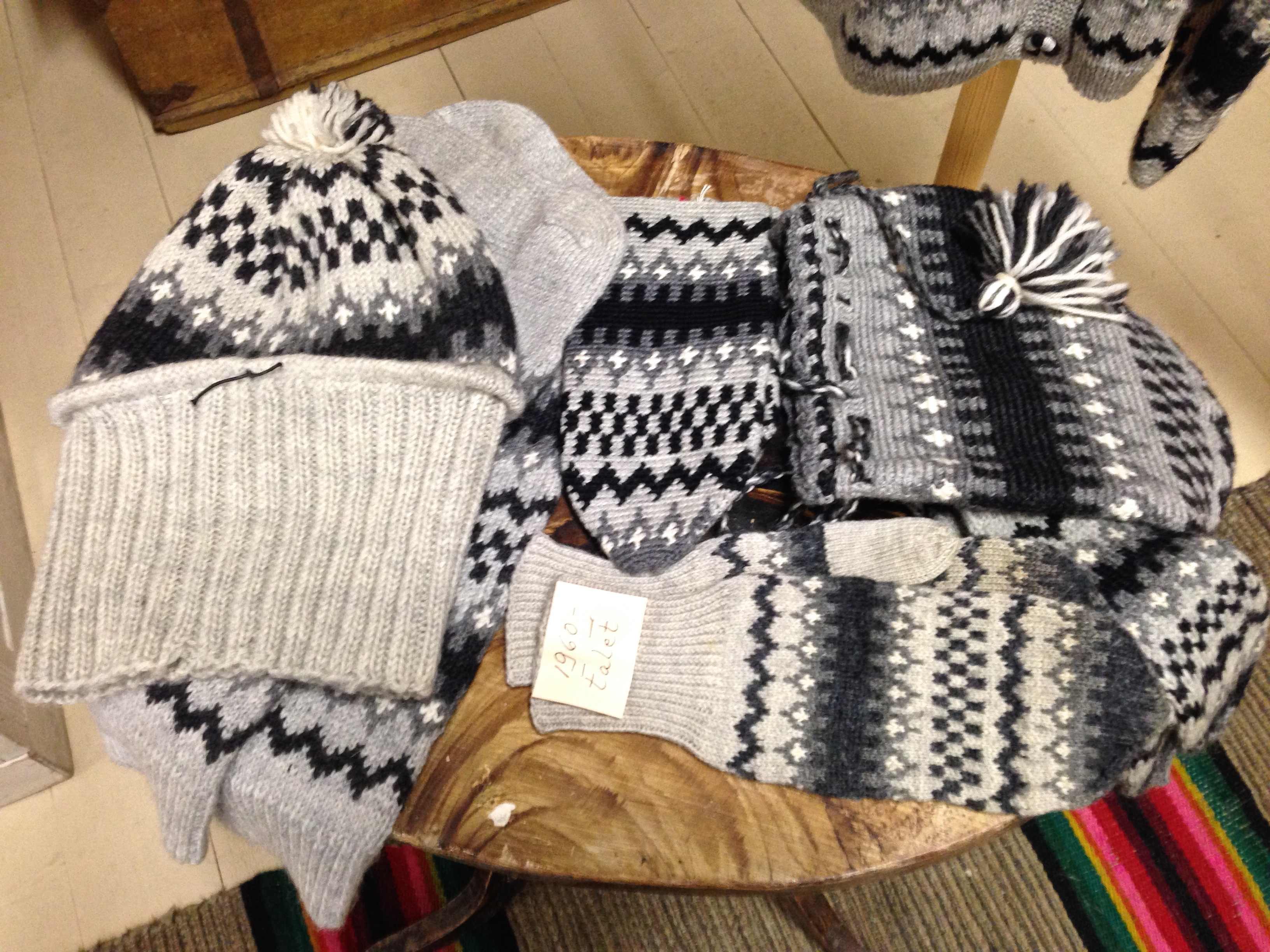
Knitted and crocheted hats and mittens, and a small bag:
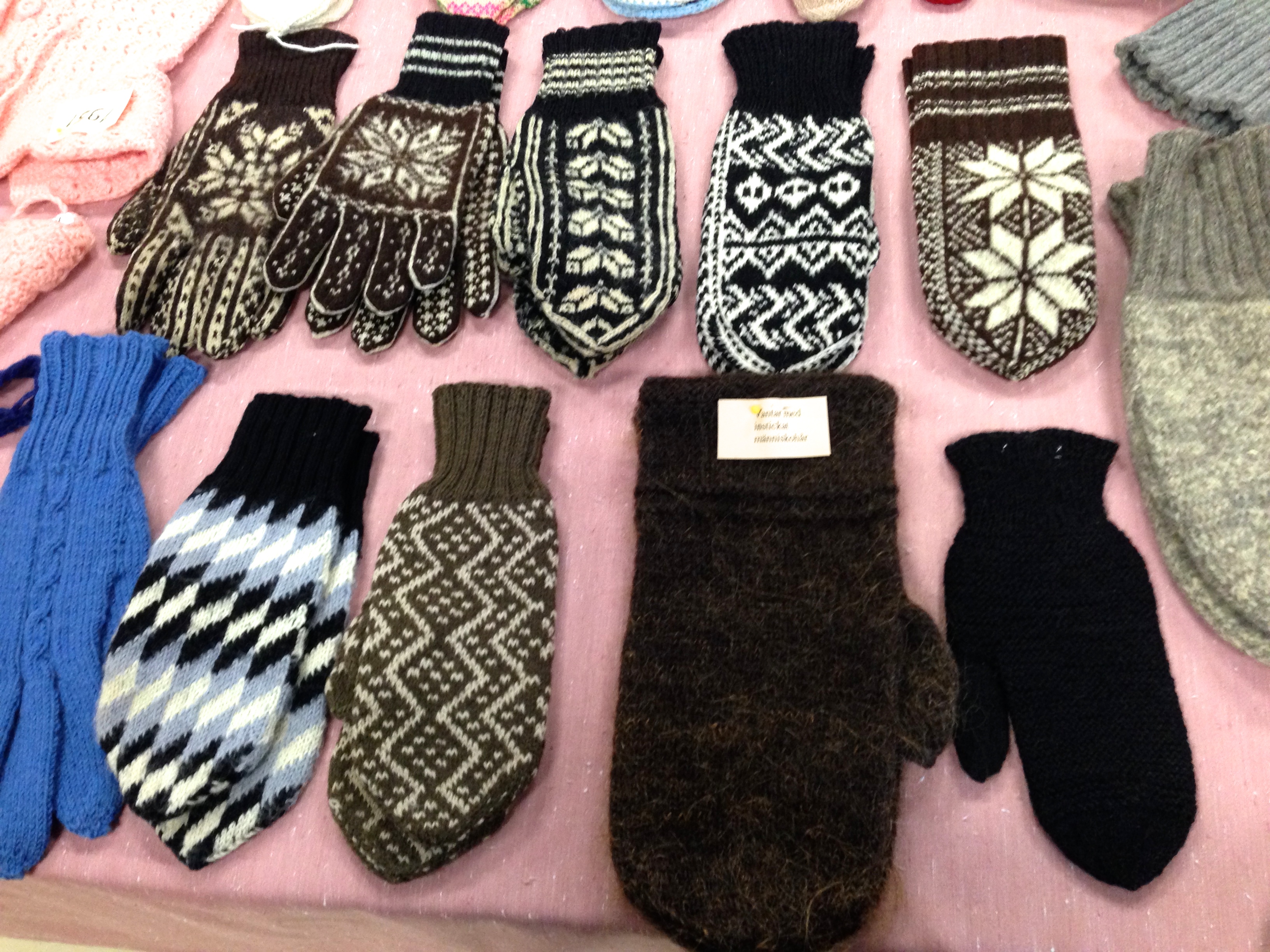
Mittens and gloves with influences from Norway. The big mittens have human hair knitted into them for stronger wear. They also resist water well.
A knitted and crocheted underskirt that was popular all over Ostrobothnia at the beginning of the 20th century:
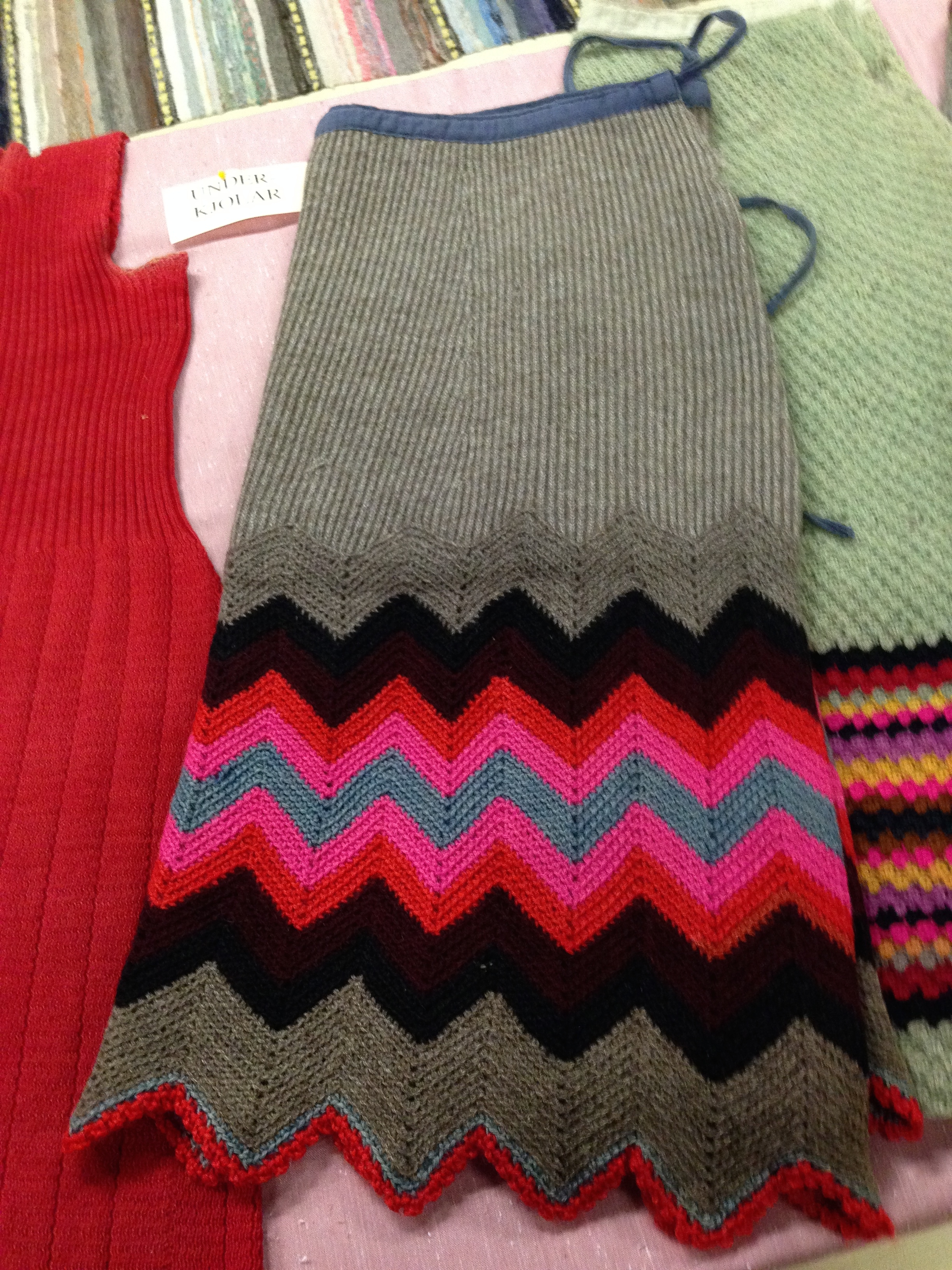
I feel tempted to make one myself…
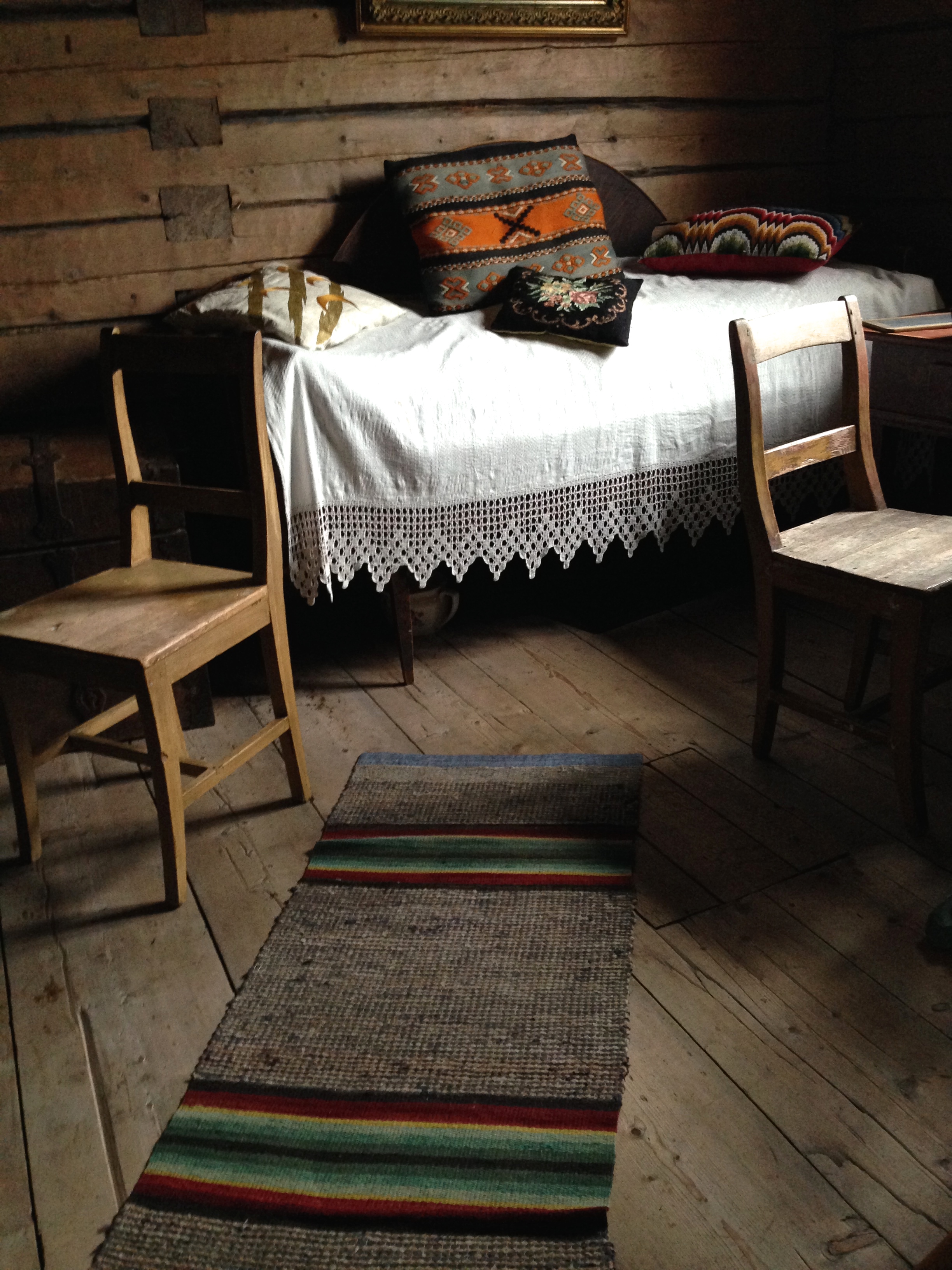
This is one of the small bed chambers with it’s nicely made bed. This way of using crocheted lace was common in many places. I like it, but being a person who allows the dogs to sleep in my bed I don’t find it very practical 🙂 The carpet has a stripe called the “Malax stripe”: there has to be a black stripe in the middle. The rag rugs often covered the whole floor in the winter to prevent draught.
There was much more to see at Brinken, but let’s go on to the museum in Korsnäs. In this small municipality an amazing sweater was designed in the 19th century. It’s unique, as it’s partly crocheted and partly knitted. The women also developed a way of knitting where as many as four knitters work on the same sweater together, sitting in a circle, each knitting her own row and advancing in the same speed as the others. When we visited Korsnäs there were three knitters at work:
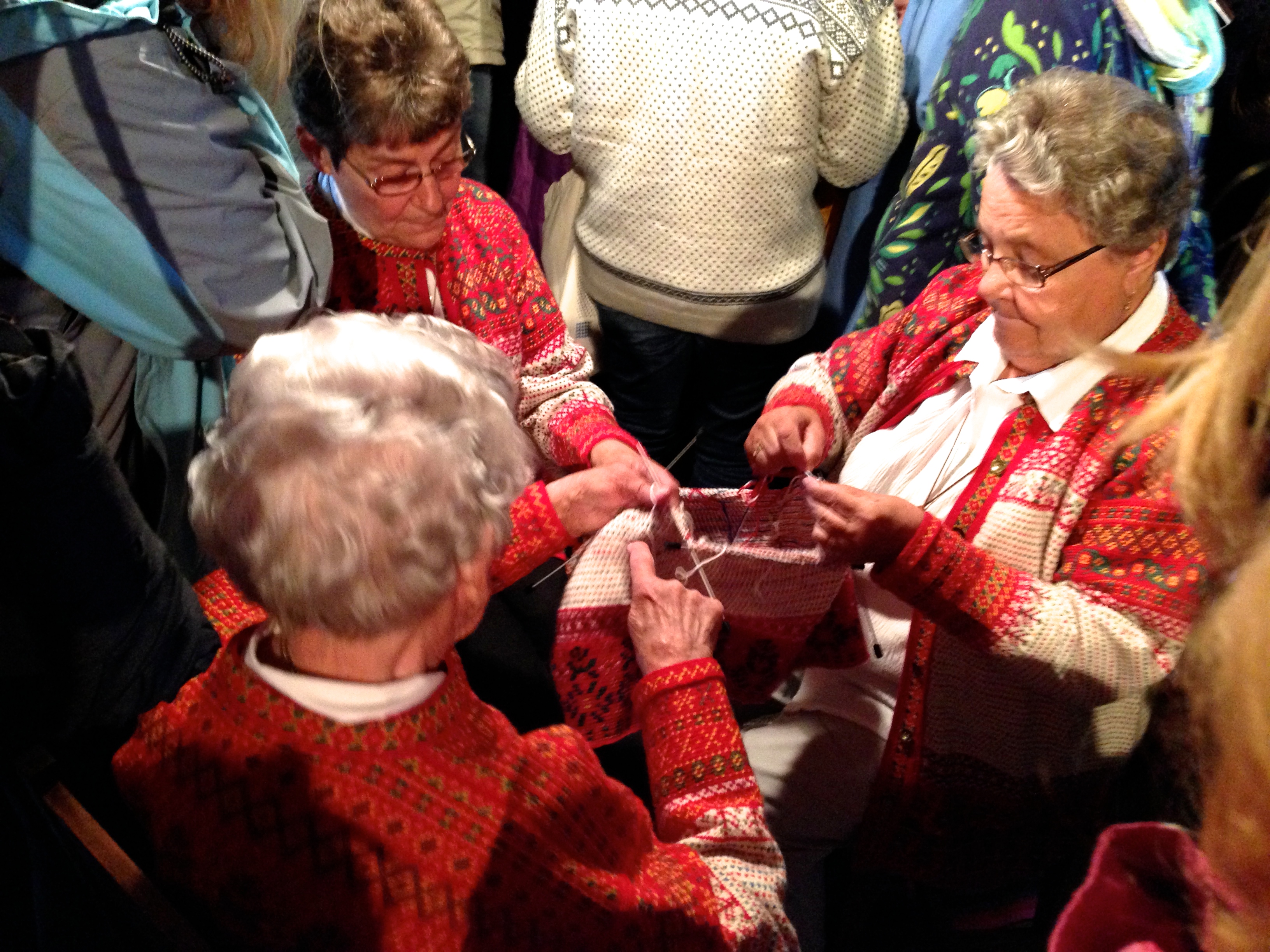
The crocheted parts must be made by one person at a time:
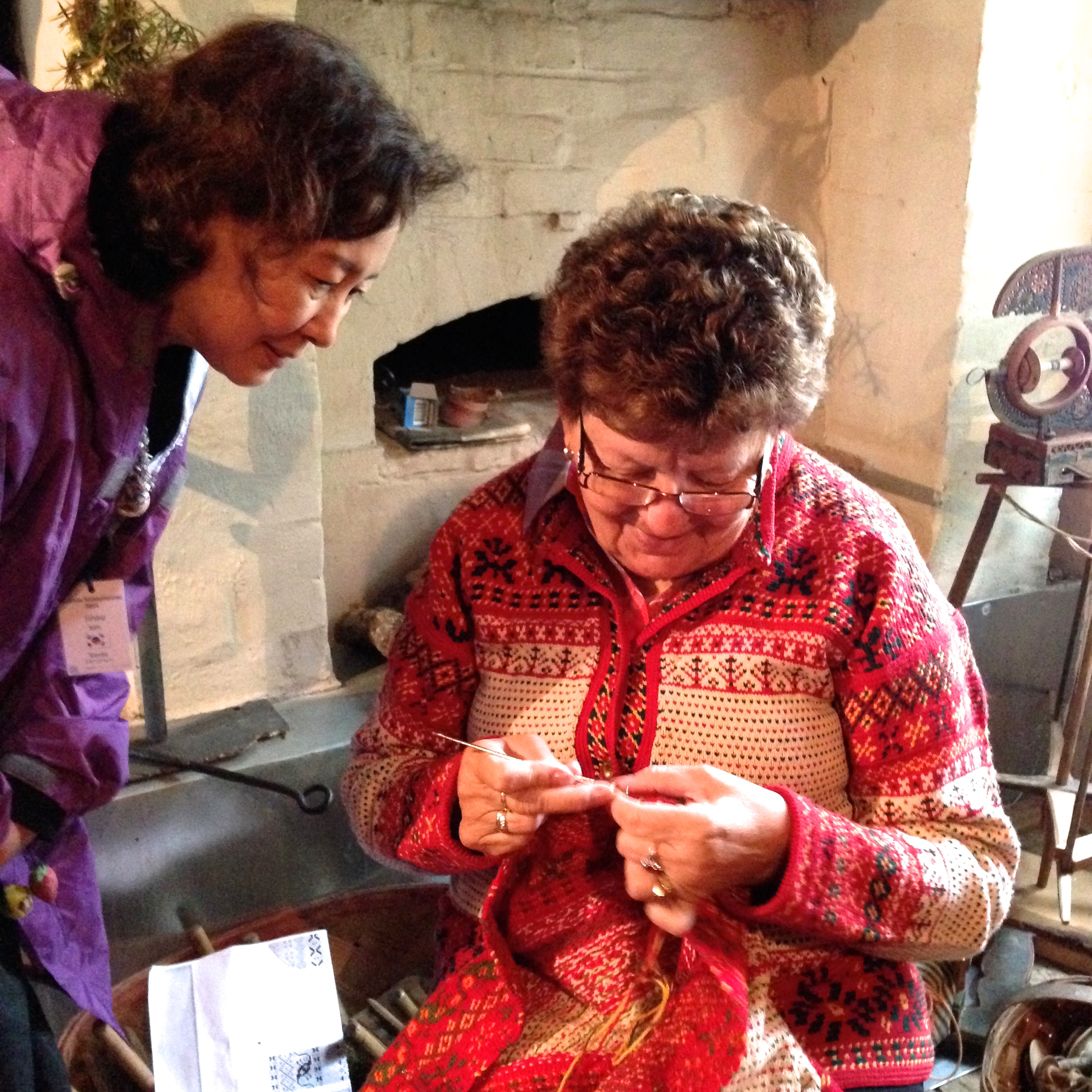
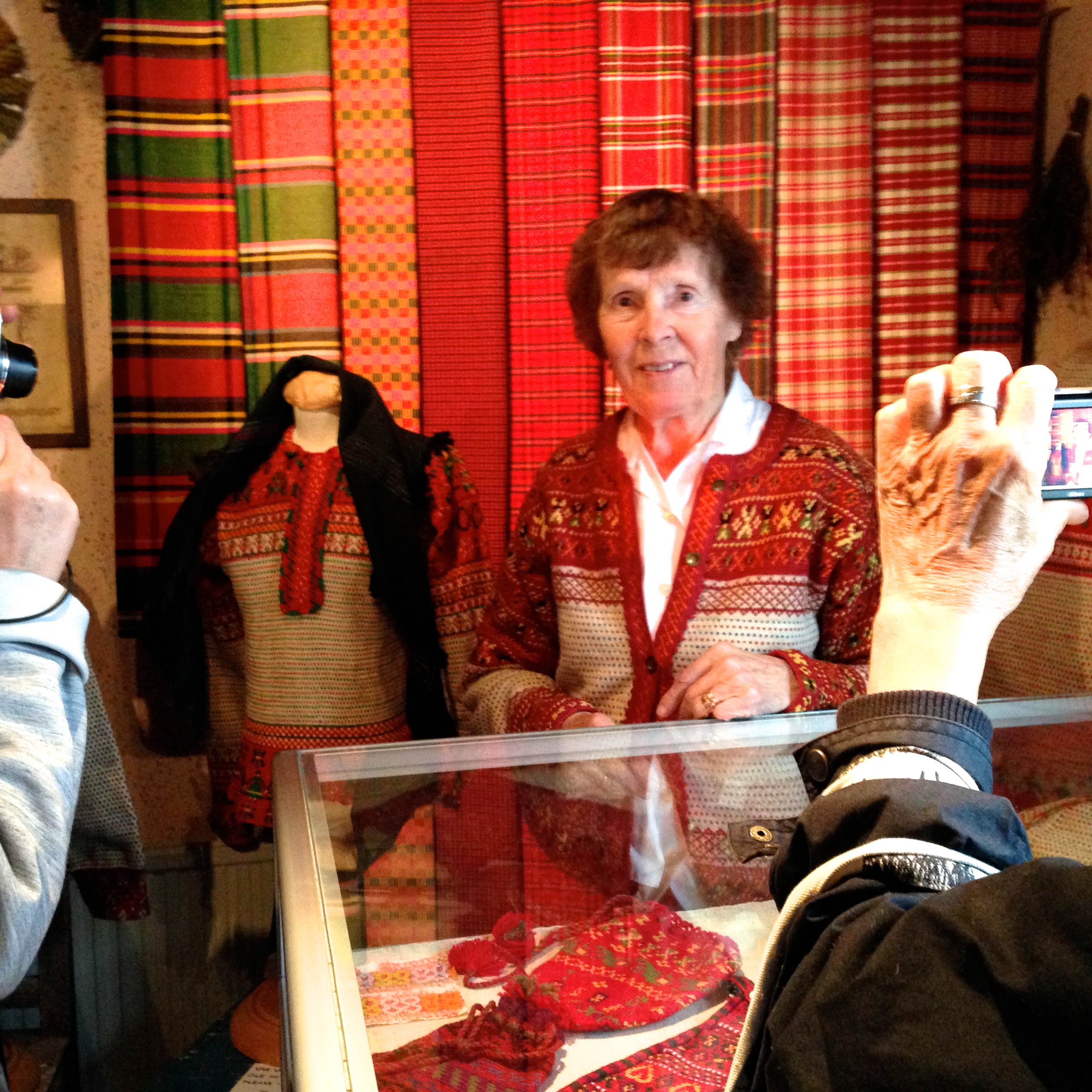
The Korsnäs sweater used to be a man’s sweater, but nowadays it’s used by both men and women. It’s often made into a cardigan now, as it’s easier to wear that way.
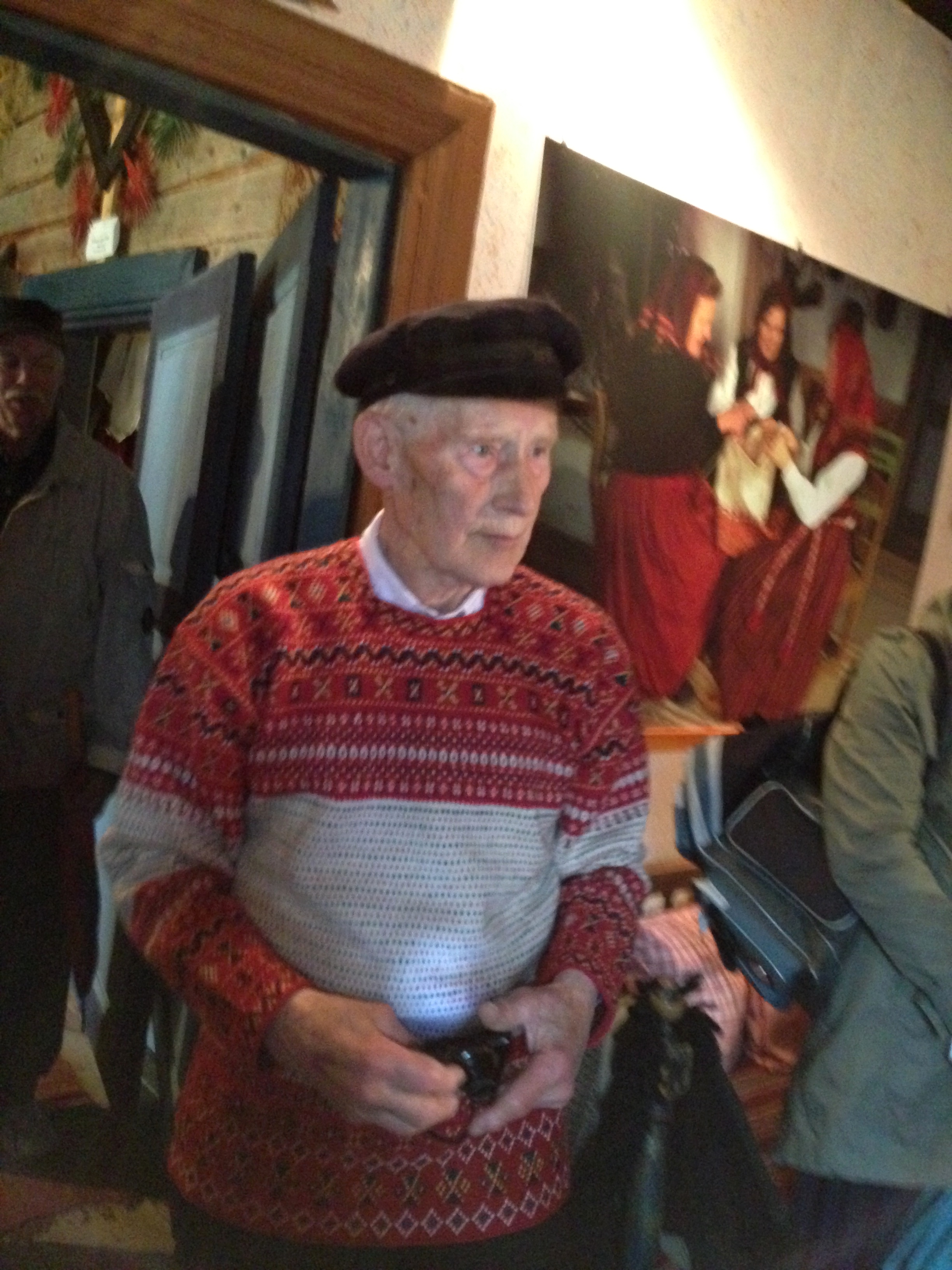
I want to show Gretel Dahlberg, who researched and wrote a book about the Korsnäs sweater that was published in 1987, “Korsnäströjor förr och nu”. If you want to purchase it, please contact the museum.
Also Korsnäs museum has a collection of crocheted lace:
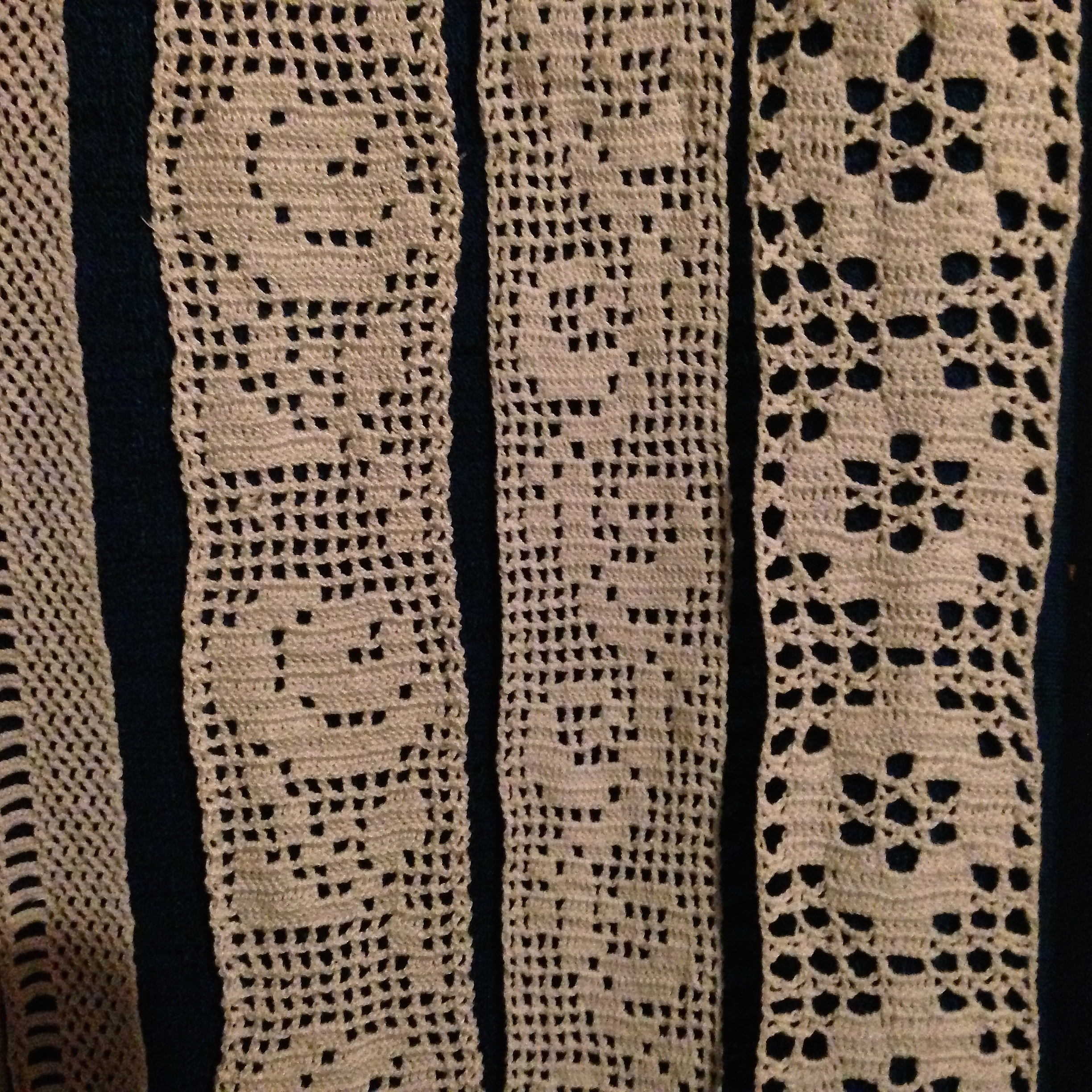
But most of all they crocheted the parts for the sweaters, and suspenders, purses, even reins for the horses.
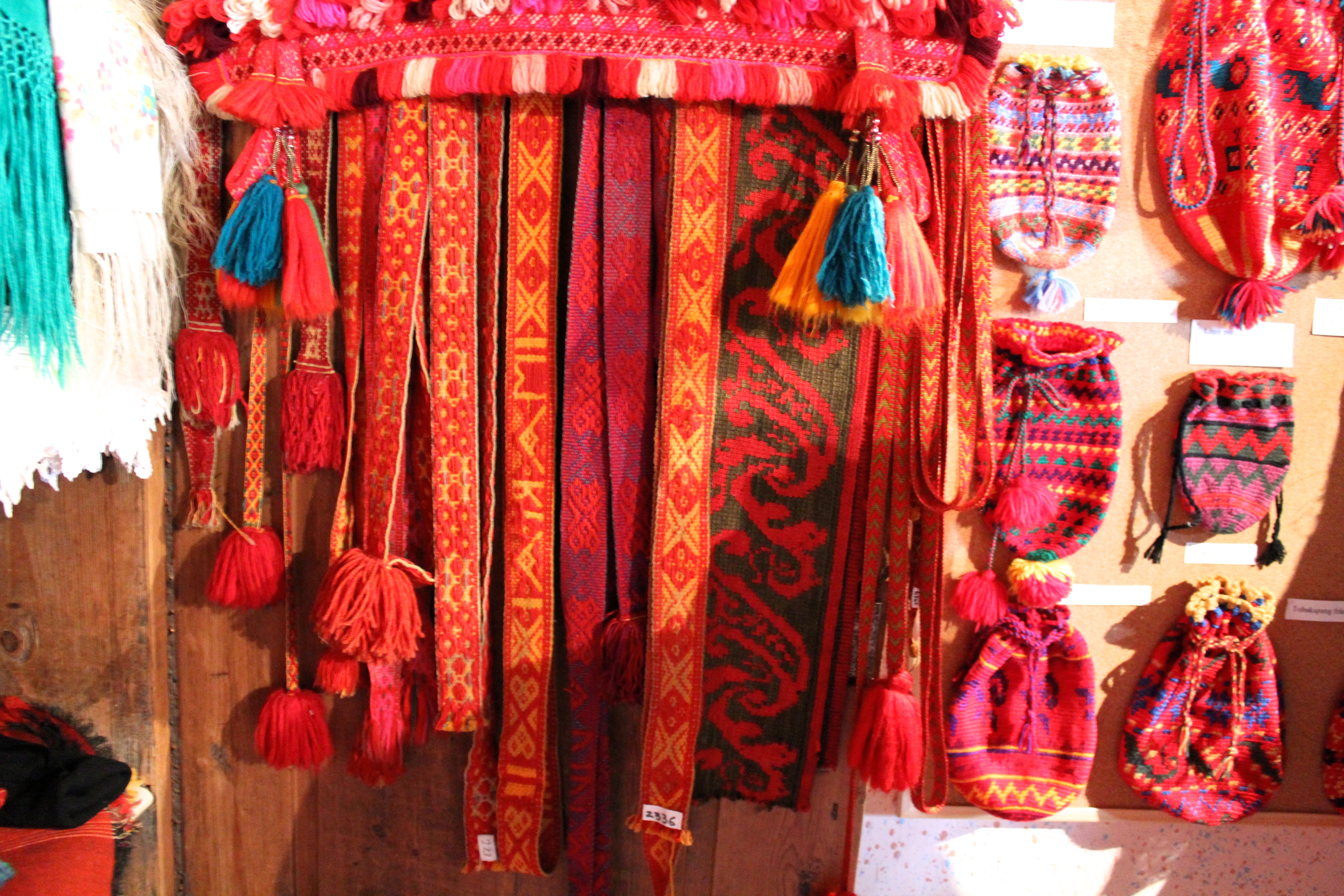
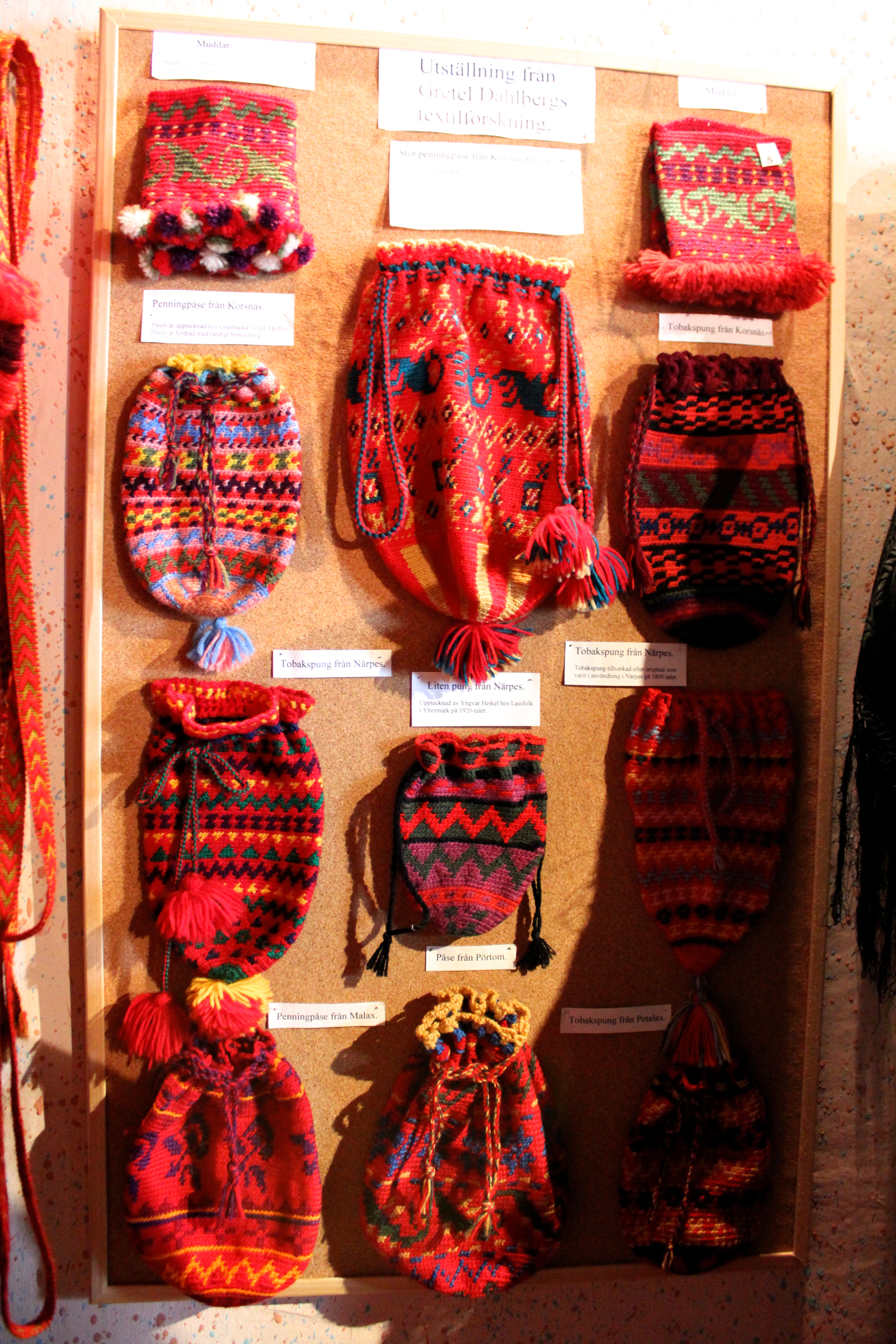
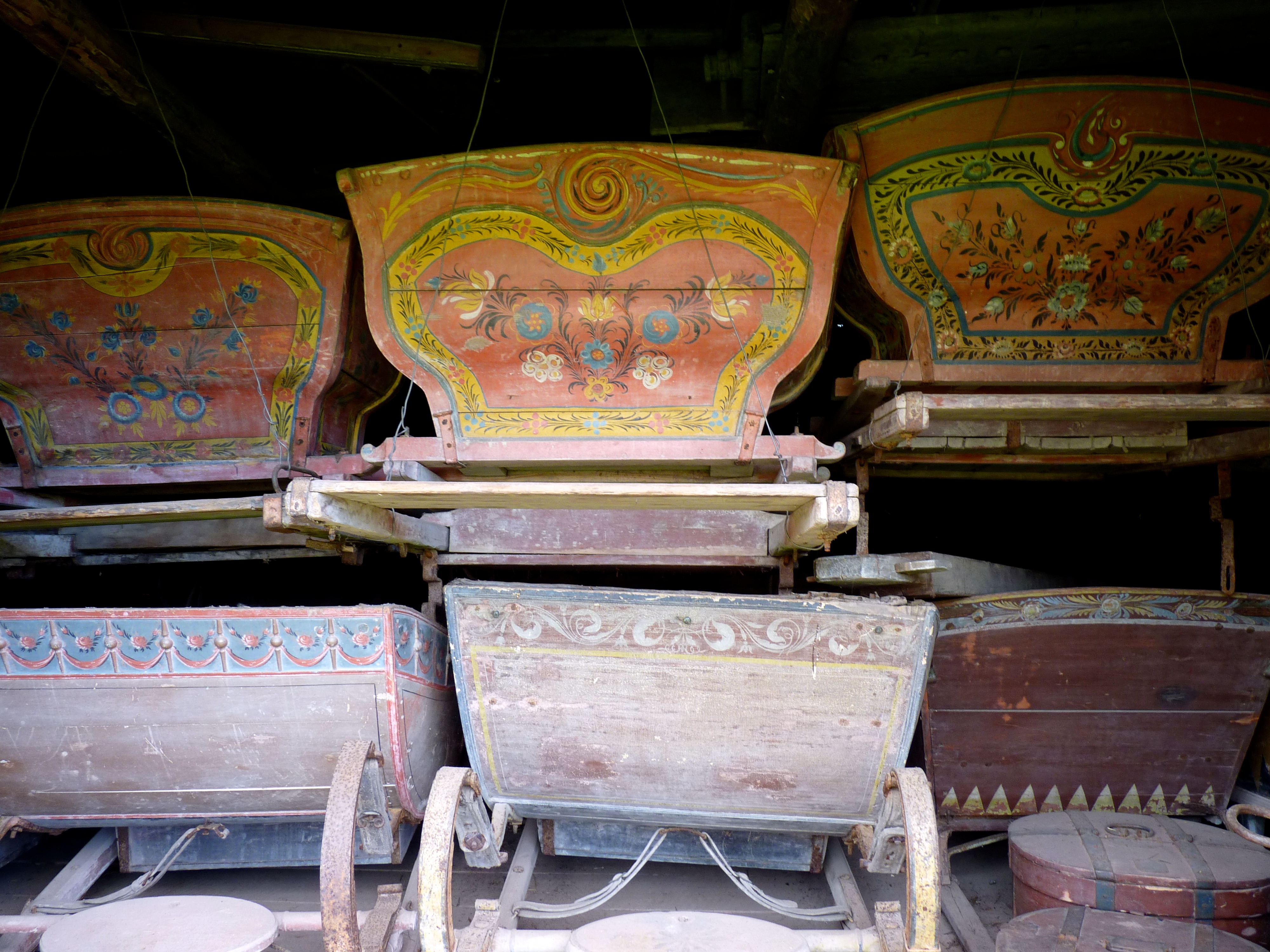
The reins where used when going to church in one of the fancy sleighs and chaises, painted in bright colours. These are from Myrbergsgården:
There are astonishingly many textiles in the small museums in Ostrobothnia. You also get to see them, which is not always possible in the big museums. It’s usually possible to get a private showing if you contact the museum first. They are not open in the winters, as they aren’t heated. From late May to the end of August most of them are open at least in the weekends. Many of them have small special exhibition, like Korsnäs Museum, where there is a seal hunting room in the attic. For spinners: Myrbergsgården has its spinning treasures in two of the attics: wheels, lazy kates, skein winders. There is also a smithy that is still in use once in a while.
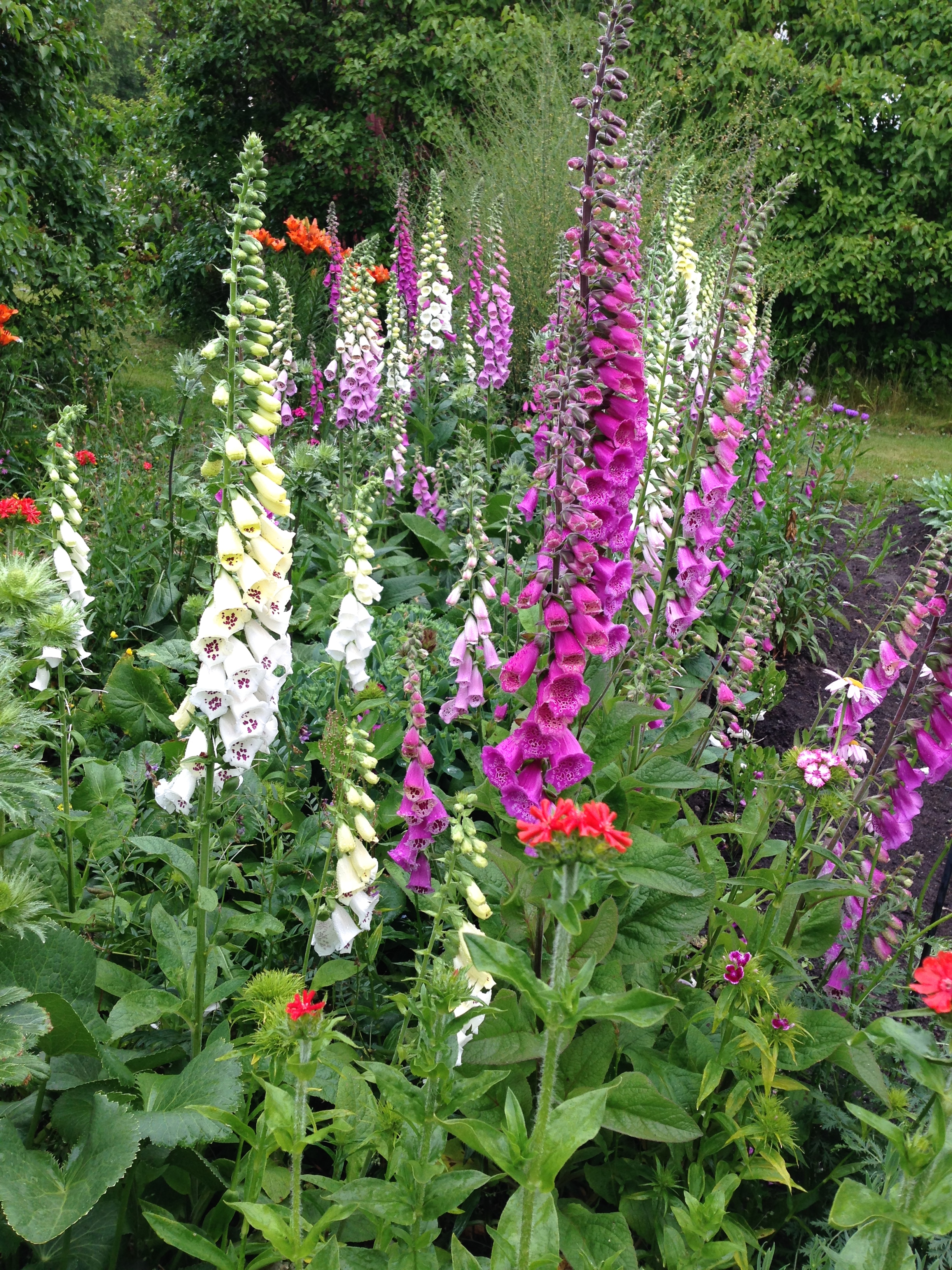
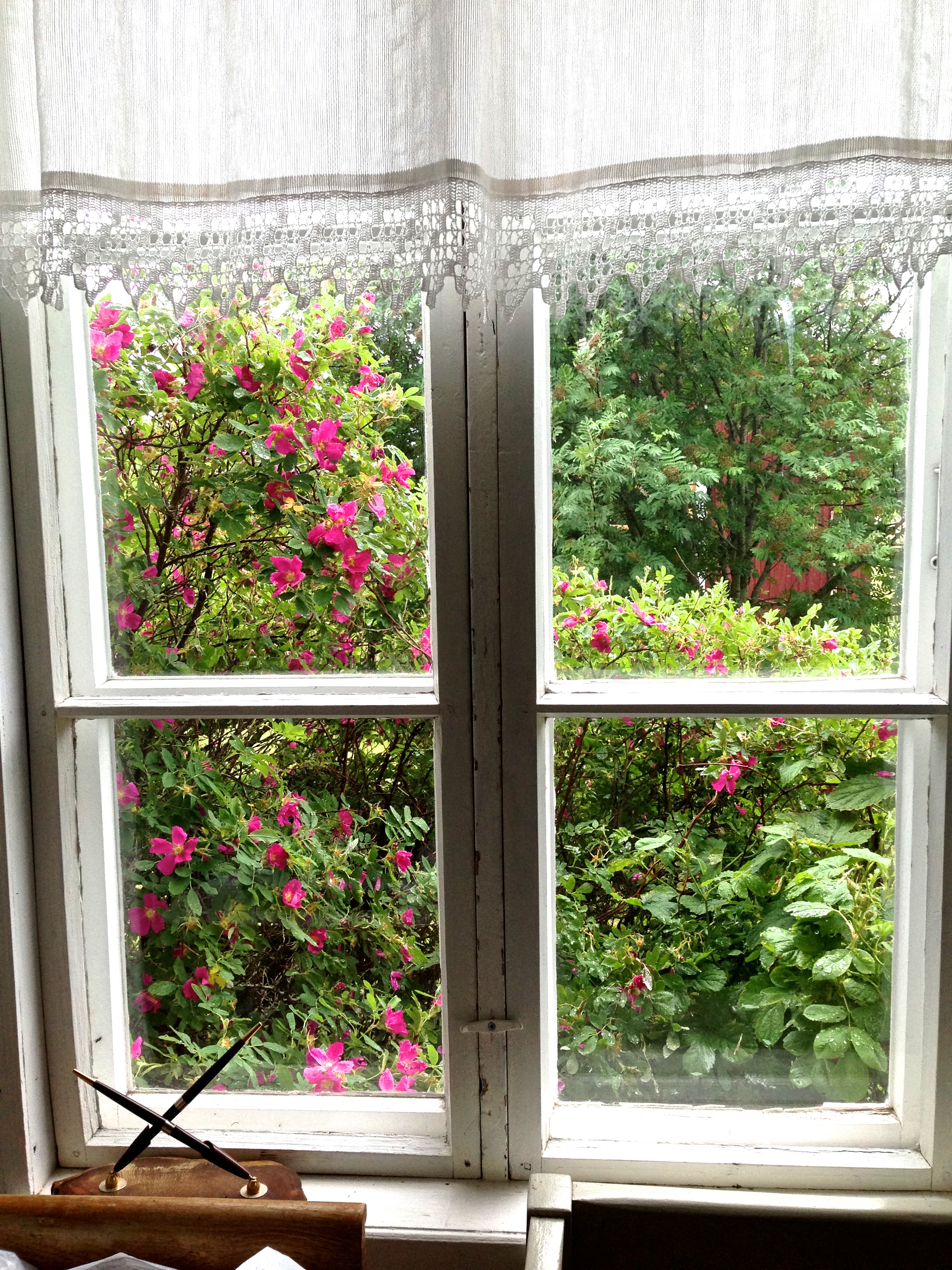
Brinkens museum has a beautiful flower garden. Let’s end with the fox gloves and a view from a window:
Video from the Nordic Knitting Symposium 2014
Nordiskt sticksymposium – Pohjoismainen neulesymposiumi – Nordic Knitting Symposium
I min hemkommun! Kotikunnassani! In my community!
Symposium. Suomenkielinen käännös on työn alla.
Det kommer att bli ett fantastiskt symposium, det är helt säkert. It’ll be an awesome symposium, no question about that.
Välkomna alla! Tervetuloa kaikki! Welcome everybody!
 Barbro's Threads